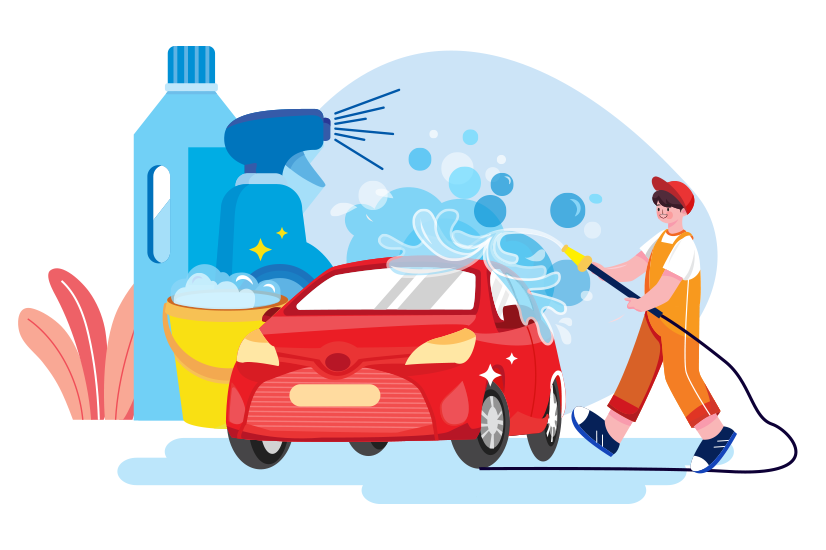
Here’s a dirty little secret many people don’t know: Washing a car in the driveway gives us a shiny vehicle but messes with the water quality of our streams, rivers and groundwater.
Think about that car wash: The soapy water or solvents that get the vehicle clean, along with the pollutants we wash off – oil, grease and grit that may contain heavy metals – all go somewhere.
That somewhere is most likely Mt. Lebanon’s storm sewers, which convey stormwater to local streams. Mt. Lebanon’s streams flow into either Chartiers Creek or Saw Mill Run, and then on into the Ohio River.
Once in the streams, this dirty water can be toxic for aquatic plants and animals. Phosphate-rich soap can lead to algal blooms and reduced amounts of oxygen in a stream, and pollutants can harm sensitive amphibians and fish. Much of our drinking water also comes from rivers so that car wash could affect more than just wildlife.
With all that in mind, what’s a thoughtful vehicle owner to do? Here are some options, according to the Pennsylvania Department of Environmental Protection and Mt. Lebanon’s stormwater management ordinance, which aligns with state law:
The best option is to take your vehicle to a commercial car wash. These businesses are required to collect the dirty wash water and clean it on site or send it into the sanitary sewer system. Water that goes into the sanitary sewers, unlike storm sewers, will go to a treatment plant to be cleaned before it enters our rivers.
If you wash your car at home, just use water. Rinse, scrub, repeat. It’s best to not use cleaning agents – soap and degreasers.
If you must use soap, please make sure it is phosphate-free. This is because phosphates are a nutrient for algae, making it grow excessively. Algal growth reduces the oxygen levels in water, which in turn harms aquatic life.
If washing at home and using soap, pull your vehicle onto a gravel area, and let the wash water infiltrate into the soil, a process that helps to cleanse the water before it eventually drains into a nearby stream.
You might wonder: “What about the kids’ car-wash fund-raisers this summer?” We wondered too. The state DEP doesn’t want to be a killjoy. Its fact sheet on pollution discharges into the storm sewer (like parking-lot carwashes) says kids should use one of the alternatives listed above. So how about partnering with a carwash and getting some of the proceeds, washing without soap or waving those signs at a gravel parking lot? After all, what could be more important than the water we all rely on?