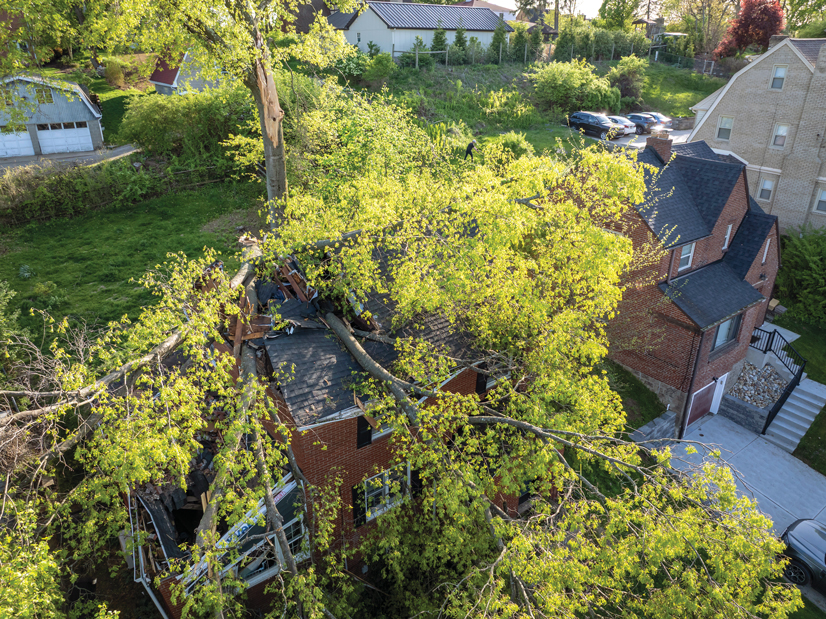
90 mph winds and teeming sheets of rain struck western Pennsylvania on April 29 around 5 p.m., just as people headed home from their workdays. The worst of the storm lasted no more than 10 minutes but caused more than a week of power outages and unprecedented damage.
Mt. Lebanon was second only to the City of Pittsburgh in number of incidents, according to Fire Chief Kurt Christofel. Trees fell on a dozen homes, thousands of residents lost power, 90 of them for for up to seven days and emergency responders fielded 150 calls in just the first three hours. Volunteer firefighters went straight to the station as the event began, donating 182 hours to the community in a six-hour period, said Deputy Fire Chief Sean Daniels.
At the same time, Mt. Lebanon responders were faced with two other emergencies: a fire call at Bower Hill Apartments and a Special Weapons and Tactics (SWAT) call in West Mifflin. Several Mt. Lebanon police officers are on the South Hills Area Council of Governments’ Critical Incident Response Team (the South Hills version of SWAT) and people who were not immediately needed during the storm were deployed for that call. At the high rise, the smoke was a result of overheated generators, so luckily, no active fire. Still, first responders had to clear the building, assist a resident who suffered a health event while evacuating, and assess the situation. All while the rest of the community was undergoing a once-in-a-lifetime storm. “Every possible resource was tapped,” noted Mt. Lebanon Police Chief Jason Haberman.
Since the storm was so fast-moving, Daniels said Allegheny County 911 was inundated with an unusual number of calls all at once, rather than over a prolonged period. While 911 hit capacity, Mt. Lebanon’s phone service was knocked out by the storm, so Mt. Lebanon responders acted creatively to find residents in need. Haberman explained, “We missed redundant 911 calls, but we didn’t miss life-threatening events because of the call issues.”
The public information office relayed comments and messages from residents on social media to the incident command. Fire and police officers texted one another up-to-date information. Deputy Fire Chief Larry Celender, who is also the assistant emergency management coordinator, created a Teams chat and spreadsheet for the fire department, police department, public works and public information to track calls, responses and outcomes, even after 911 and regular phone service was restored. The spreadsheet was then used for the next week to track the progress of every storm-related incident.
Celender is formalizing a flowchart and activation process for future events. “Whatever you do going forward needs to be scalable,” he said. “So we’re working on that now.”
Throughout the week, Celender tapped into Allegheny County’s virtual emergency operations center to get updates from county officials and utility providers. He maintained a list of Mt. Lebanon homes and streets without power, which Duquesne Light used to respond to outages. In the coming months, Duquesne Light will present in front of the Public Utilities Commission to discuss procedural changes to its reporting systems for widespread outages.
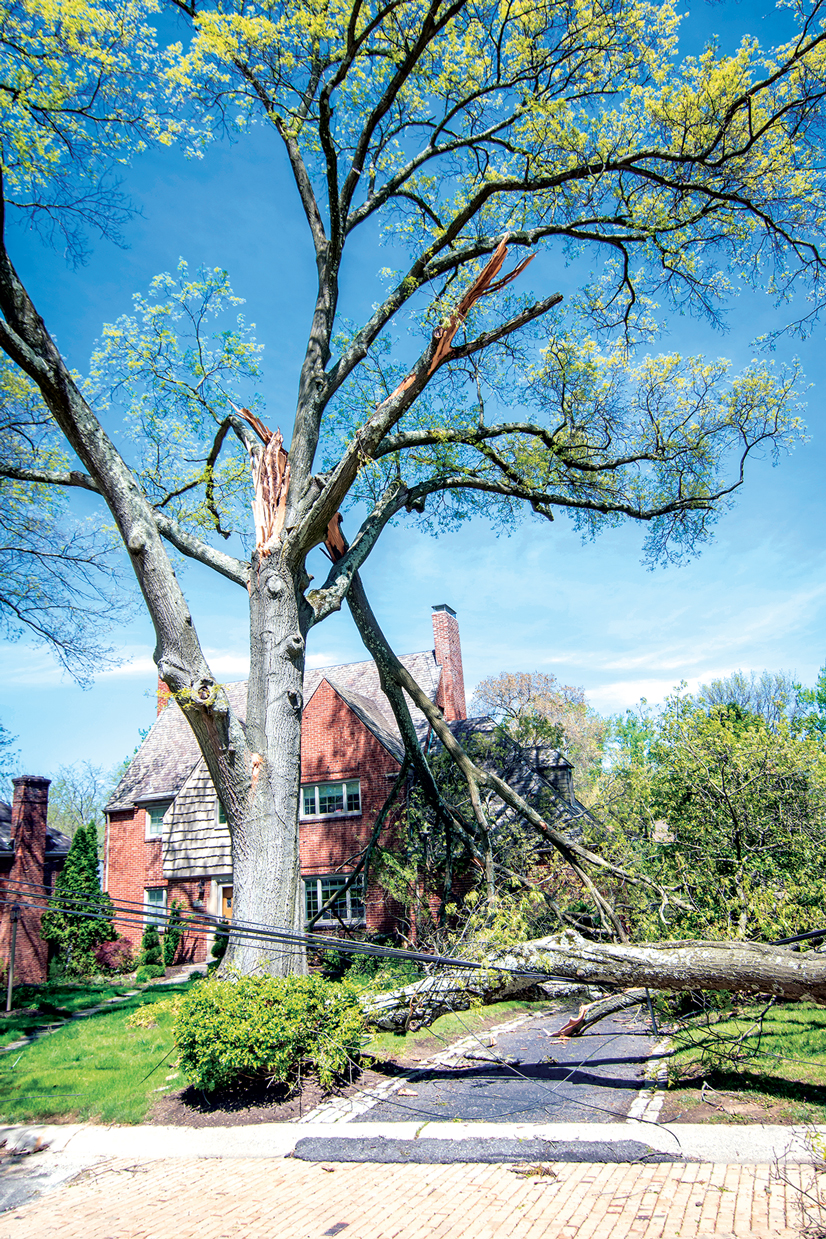
Things to know
While many of us may not see another 90-mph windstorm in our lifetimes, these events illustrate the importance of emergency preparedness.
Thankfully the larger residential facilities in Mt. Lebanon, such as The Pines and Asbury Heights, are prepared for such emergencies. More than 20 years ago they were required to make emergency plans to care for some of the more vulnerable residents during disasters, said Christofel.
However, individual households need to have thorough plans in place as well, said Haberman. In places like California, where natural disasters are more common, most residents have go-bags and household emergency plans in place. Daniels said even though we’re fortunate in the Pittsburgh area to have fewer weather emergencies, our residents still need to be prepared for when one does occur.
Here are some ways to prepare.
Keep a grab-and-go container in your home with:
- Water (rule of thumb is one gallon per person per day for at least three days)
- Nonperishable food to last three days
- Manual can opener
- First aid kit
- Extra phone charger and portable charger bricks
- Flashlight and extra batteries
- Battery-powered radio
- Whistle
- Hygiene items
- Blankets
- Extra clothing and shoes
Prepare your car with:
- At least a half tank of gas (If gas stations lose electricity, the pumps won’t work)
- Blankets
- Ice scraper
- Water and nonperishable food
- Local maps
- Phone charger
- Cat litter or sand
- Jumper cables
- Extra clothing
If you have pets or special medical needs, account for them in your plan.
Consider purchasing a generator to use during outages.
Create an escape plan from your home in case of fire or other emergencies. The Mt. Lebanon Fire Department can meet you at home and help you create a fire safety plan for free. Call them at 412-343-3402 to set up a time.
For residents with special medical needs, it’s especially critical to have plans in place. If you use medical equipment that runs on electricity, what is your backup plan? If you live in a high-rise building and the elevator goes down, how will you get out? If you need to stay somewhere else, where will you go? You should have the answers to these questions before an emergency occurs.

Keep these safety precautions in mind during hazardous events.
- If you see a downed power line, always assume it’s live. Just because a wire is down, does not mean the power was cut off. Dead wires can be reenergized at any time. Never touch a downed power line. Report it to 911.
- 911 is always reachable through text, even if the phones are down.
- Never drive or walk around barricades set up by fire, police or public works.
Finally, sign up for LeboALERTS and LeboEmergency to receive important information.
LeboALERTS are non-emergency alerts that keep you on top of everything from safety bulletins to anticipated traffic tie-ups, community event announcements and weather cancellations. You chose the categories and edit them whenever you want. Register for them on mylebo.mtlebanon.org [1].
LeboEmergency provides time-sensitive messages about life-threatening emergencies through text, phone call and email. The customized notification system lets you pick how you want to be notified. Our system automatically includes the phone number, landline or cell, that you’ve registered with the water company. But you must opt-in to get texts, calls on additional phones and emails. LeboEmergency notifications are sent during serious, dangerous situations, like active shooter emergencies, evacuations, missing persons or chemical leaks. You can sign up online at mtlebanon.org/alerts [2] or by texting LEBO to 99411.