Spring is the time to break out of those winter doldrums and start freshening up your home and focusing on lawn and garden care.
But, where and how to begin?
We reached out to the experts at Rollier’s Hardware, 600 Washington Road, where four generations of Satterfields have been at the helm since 1953.
Rollier’s prides itself on product selection and customer care. Anyone who’s ever shopped there knows it’s more than just a hardware store.
Ready to do some spring cleaning?
Let’s start inside the house, with tips from owner Derek Satterfield and his Rollier’s staff.
HOME CARE
“Many of us battle with mold and mildew growth on surfaces around our homes, both inside and out,” Satterfield said.
He recommends using a mold killer and then cleaning the stains with a heavy-duty cleaner intended for the surface.
ROLLIER’S TIP: Consider using spray preventers (outside) or a moisture absorber (inside) to keep growth from reforming each year.
LIGHTING
Next, focus on the lighting in your home. Since LED light bulbs are here to stay, the options are more plentiful than ever, with warm/soft bulbs being the most popular.
ROLLIER’S TIP: If installing LED bulbs in a dimmable fixture, you will need the proper dimmer switch that is more sensitive and verified to work with LED bulbs. If your LED bulbs are starting to flicker, it might be time to replace them.

BIRDS WILL BE BIRDS
“If you see birds interested in that wreath on your entry door, you might want to consider removing it for a couple of months to deter birds from nesting in it,” Satterfield suggested.
ROLLIER’S TIP: To deter birds from nesting at inconvenient spots around your home, consider installing reflective ribbon tape or even mountable spikes to prevent them from sitting on ledges or eaves.
Now, let’s take this operation outdoors!
LAWN CARE
Start by raking your lawn and inspecting soil and grass conditions. “It is always a battle to decide what is most important for your lawn in the spring… do you seed, do you prevent weeds, do you kill weeds, do you just fertilize? The general rule of thumb is that you cannot apply weed kill or weed preventers to young grass that is just getting its footing,” Satterfield pointed out.
Therefore, avoid weed control products on any areas being seeded until after the area has been mowed three to four times.
ROLLIER’S TIP: When reseeding bare spots, be sure to get good seed-to-soil contact. This means removing dead grass/weeds and loosening existing soil. A thin coat of fresh soil, called a topdressing, may be needed. New grass seeds should be watered by you or by Mother Nature each day (sometimes even twice a day when really hot). Applying a thin layer of straw, peat or loose soil above the seed will provide two benefits; keeping bare spots from drying out quickly while also hiding the grass seed from being eaten by small animals.
For thin lawns, consider overseeding and applying a “starter” lawn food that will encourage lawns to spread and thicken over the coming months.
IN THE WEEDS ALREADY?
If you’re battling spring weeds, consider either a granular or a liquid lawn weed control, but just avoid areas that are newly seeded to prevent damage to that young growth. “Weed controls applied early in the spring can take longer to work since weeds are not stressed as much when temperatures are cooler,” Satterfield said.
GOOD SOIL ALLOWS PLANTS OF ALL TYPES TO BE HEALTHIER
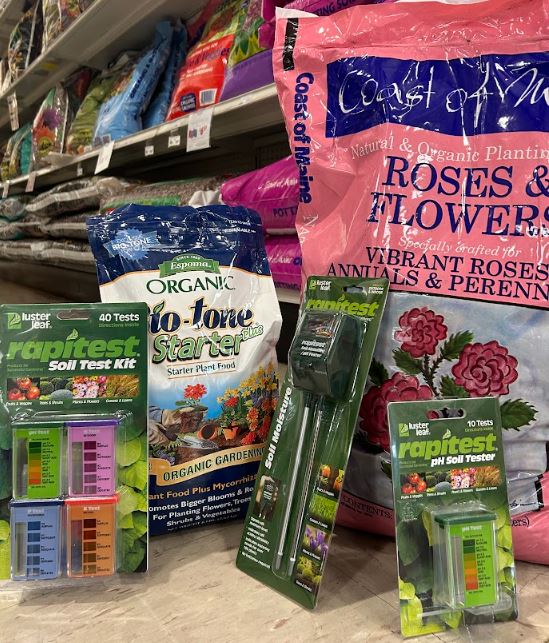
There has been an increased focus on soil and for good reason. This means ideal nutrients, ideal soil consistency, and proper soil pH!
ROLLIER’S TIP: Measure the soil pH of your lawn and garden areas. Consider applying a fast-acting limestone that can quickly raise soil pH in turf areas, since our turf grasses like a neutral pH. The proper pH improves soil conditions for grass to thrive, while helping to keep away weeds and moss. It is typically recommended to apply a fast-acting limestone once a year or once every two years around the Pittsburgh area.
Satterfield recommends cutting your grass higher during times of heat and drought in the summer months, since taller grass keeps the soil cooler and encourages deeper root growth.

GARDEN CARE
It’s a good idea to wait until early May before planting a vegetable garden to avoid those late spring frosts. Make sure to turn over garden beds before planting seedlings or young plants and try applying an organic fertilizer to replenish nutrients for the new growing season.
ROLLIER’S TIP: Consider applying deer repellents early in the season, before flowers burst and produce ripens. “By training deer to go elsewhere earlier, you can hopefully alter their daily route and you don’t have as big an issue in the summer,” Satterfield said. Depending on the time of year, you might even try rotating through different deer repellents.
PLANT CARE
When it comes to fertilizers, there are a number of options on the market. Liquid plant foods have quicker results, but dissolve very quickly. Liquid fertilizers need to be applied every two-to-three weeks, while dry granulars dissolve more slowly and can be applied every two-to-three months.
ROLLIER’S TIP: Prune and remove old dead growth from perennials in garden beds. Consider fertilizing with a granular plant food that will slowly release nutrients over several months. Lots of options are available including many organic options that are filled with macro and micro-nutrients.
Follow all these springtime home and garden tips and before you know it, it will be summertime!