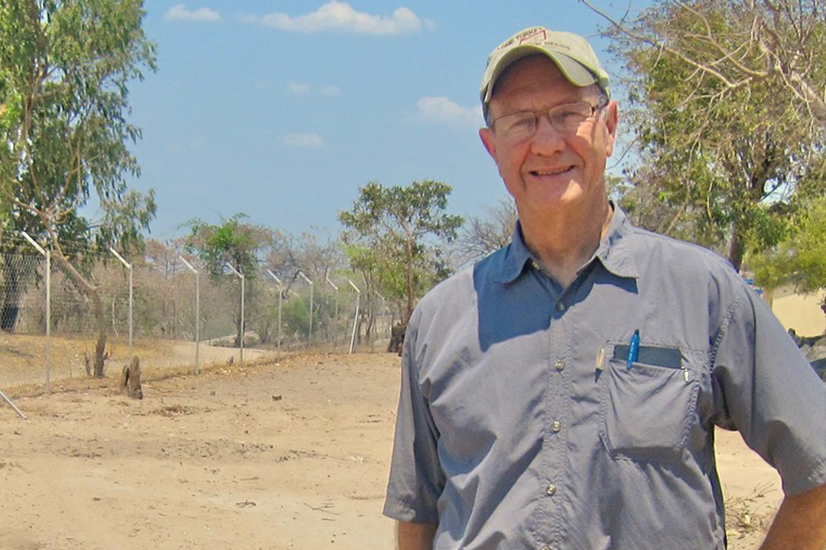
When Drew Harvey, Hazel Drive, first visited northeastern Zimbabwe in 2006, he didn’t expect to help transform healthcare access for thousands of people. But nearly two decades later, Harvey, alongside a growing network of volunteers, has helped rebuild six rural clinics, bringing critical medical care to remote villages.
It started with a connection through a community group in Bethel Park.
“The Global Methodist Church approached us and said there were hospitals around the world in disrepair that needed help,” Harvey said.
One of those places was Old Mutare, Zimbabwe, where a major hospital and several remote clinics were struggling to provide care.
“In 2006, I led a team of 18 people, including some from Mt. Lebanon, to visit Old Mutare,” Harvey said. “We were amazed by the strength and resilience of the people, despite the poor conditions of the facilities. When we got back, we knew we wanted to stay connected.”
This led to the creation of The Nyadire Connection (TNC). Initially focused on financial support, the organization soon expanded to include physical restoration, starting with the hospital and orphanage. As time passed, the volunteers saw a need to rebuild six remote clinics.
“We visited those clinics and saw hundreds of people sitting under trees, waiting for care,” said Harvey. “The buildings were small, without running water or electricity. We knew we had to do something.”
The team devised a plan to rebuild the clinics, but it would cost around $2 million.
“It was daunting,” Harvey admitted. “But we didn’t go in with a ‘parachute’ approach — we built relationships. It needed to be long-term and community driven.”
Harvey explained that the “parachute” model is where outsiders fly in, offering short-term aid, then leave without making a lasting impact.
“As Americans, it’s easy to think you can show up for a week and fix things,” he said. “Real change takes time, credibility and the community’s involvement.”
Each project was a collaborative effort. The local communities made more than 300,000 bricks by hand, using sand and rock from nearby riverbeds.
“Women would carry buckets of sand on their heads while carrying babies on their backs,” Harvey said. “It was remarkable to witness their commitment.”
TNC completed the rebuild of Chindenga Clinic, the last of the six, in February 2022, after a particularly ambitious fundraising push.
“We called it the ‘moonshot.’ We had no idea how we would raise that much, but somehow the money came in,” Harvey said.
Hannah Mafunda, health coordinator of the Zimbabwe Episcopal Area Health Board, has been involved in the clinics project from the beginning. During the “moonshot” launch for Chindenga, Mafunda said the impact has been measurable both in numbers and in the daily lives of staff and patients.
“With adequate staff housing, medical personnel at the six clinics has more than doubled; and with more space at the clinics for waiting mothers and delivery rooms, at-home births have been reduced by about half,” Mafunda said.
She also highlighted other benefits, including more shelters for expectant mothers, which has led to improved birth outcomes and post-natal monitoring; better staff accommodations with spacious rooms and interior flush toilets that serve as non-monetary incentives to help motivate and retain employees; and additional housing for staff, which has enabled the clinics to accept more student nurses, expanding opportunities for education and jobs.
TNC’s impact has extended beyond healthcare, inspiring a new generation of volunteers. Maddie Gioffre, a 2011 Mt. Lebanon High School graduate, first traveled to Zimbabwe with TNC the summer before her senior year of high school.
“I really connected with the kids at the orphanage,” she said. “We played games, I helped them with their times tables and we even organized a movie night at the high school. It was so much fun.”
Gioffre’s experience with TNC inspired her to stay connected to Zimbabwe long after her first trip. While at Carnegie Mellon University, she recommended Zimbabwe as a new project site for Engineers Without Borders, leading to a lasting partnership with Nyadire. One of the first projects involved installing solar-powered streetlights to improve nighttime safety.
Gioffre also helped launch a coding club at Nyadire, which aimed to teach students valuable technology skills and improve their chances of finding work.
“Unemployment is so high in Zimbabwe, and it’s difficult for kids to find work or get into university,” she said. “Coding is something that can be done from anywhere, and it’s in high demand.”
Harvey and Gioffre agree that TNC’s success stems from its commitment to working alongside the local community.
“We’ve learned that this isn’t about what we can do for them — it’s about working together,” Harvey said. “And I think we’ve gained just as much as they have.”
Those interested in supporting TNC or taking a trip to Zimbabwe should visit nyadire.org [1].