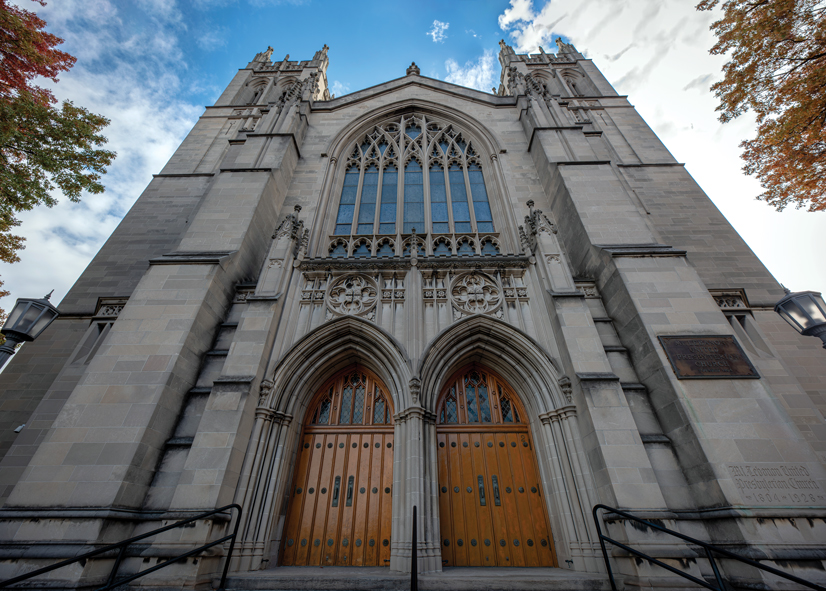
They are sprinkled like jewels along the necklace of Washington Road.
They are the eight grand churches that adorn Mt. Lebanon’s main thoroughfare — imposing, expansive, each with their own community of worshipers and people who attend programs on the premises.
North to south, they are: Mt. Lebanon United Methodist Church (technically just over the line in Dormont); Mt. Lebanon Evangelical Presbyterian Church; St. Michael the Archangel Roman Catholic Church (St. Bernard); Southminster Presbyterian Church; Mt. Lebanon United Lutheran Church; St. Paul’s Episcopal Church; Beverly Heights Presbyterian Church; and Sunnyhill Unitarian Universalist Church of the South Hills.
In one sense, their grand architecture and sweeping lawns symbolize the original growth of the municipality after the completion of the Liberty Tunnels and Liberty Bridge in the 1920s. As this magazine previously noted, three of these churches — Southminster Presbyterian, Mt. Lebanon Lutheran and St. Paul’s Episcopal — celebrated their 100th anniversaries in 2025.
But the Christian congregations of Washington Road also reflect another larger trend — the rise and decline of mainline Christianity, along with a similar decline in Catholic Church membership in the Pittsburgh diocese.
Like their counterparts across the nation, almost all of the Washington Road churches peaked in membership and attendance in the two decades after World War II. Since then, their numbers have dropped, as society has gone through major changes in the status and influence of mainline Christianity. Some congregations have weathered this sea change better than others. One church, the First Church of Christ, Scientist, closed altogether in 2018 and has since been replaced by private homes.
Membership in the Catholic Church is counted differently than in Protestant denominations. All Catholic congregants are assigned to parishes in their geographic area and counted as members, whether they attend regularly or not. Nevertheless, attendance at Masses in the Diocese of Pittsburgh has fallen by more than half in the past 30 years, and scores of parishes have been consolidated to accommodate the drop in attendance and available priests. In 2019, St. Bernard merged with Our Lady of Grace in Scott Township to become the parish of St. Michael the Archangel.
The Protestant churches on Washington Road have also been shaken by the culture wars within mainline Christianity, which in recent years have revolved around one primary issue — whether openly gay worshipers would be allowed to participate in the leadership of the church, and whether the churches would support gay marriages on their premises.
All three of the Presbyterian churches in this two-mile stretch have separated over this issue, and the Episcopal, Lutheran and Methodist denominations in the U.S. have gone through parallel conflicts.
The Era of Christendom
In the 1950s, nearly half of all American adults attended worship weekly, compared to about 20 percent today, according to the University of Southern California and the Gallup Poll.
Many religious scholars called this the era of Christendom, when church involvement was so woven into the fabric of postwar life that it was taken for granted. Tod Bolsinger, a church trends expert and Presbyterian minister, said recently that “Christendom was not about whether people were Christians. It was about the fact that Christianity had a home court advantage and was in the center of the culture. Forty years ago, if a man missed church on Sunday, his boss asked him about it on Monday.”
“Attending religious services was very much like belonging to the Kiwanis and Rotary,” added David Campbell, a Notre Dame University professor and co-author of American Grace: How Religion Divides and Unites Us. There was even a cultural status hierarchy within mainline Protestantism, Campbell said. “Just like General Motors would advertise going from a Chevrolet to a Buick to a Cadillac, in mainline Protestantism you would move from Baptist to Lutheran and then to Episcopalian, or I guess Presbyterian in Pittsburgh, which showed you had really made it.”
In the 1960s, the dominance of mainline Christianity began to fade.
The end of Blue Laws that restricted Sunday business operations, along with sports programming for young people on Sundays, meant that churches no longer had an advantage on Sunday activities for families.
The 1980s saw the rise of more theologically conservative evangelical churches and new partnerships with Republican politicians, symbolized by Rev. Jerry Falwell’s Moral Majority and its support of Ronald Reagan.
Starting with the children of baby boomers, fewer and fewer young people were raised in a church setting. By 2007, according to the Pew Research Center, 16 percent of American adults called themselves “nones,” meaning they had no religious affiliation. By 2023, that number had risen to 28 percent. Only a small portion of that group said they were atheist or agnostic. Most simply said they did not believe in anything in particular — rather than being anti-religious, they were just disengaged from organized religion.
One result of all these changes is that the grand churches of Washington Road have far fewer people in the pews than they did in their heyday.
To cite just one example, Rev. Carolyn Poteet, the senior pastor at Mt. Lebanon Evangelical Presbyterian, said that her church had more than 2,000 worshipers in the early 1960s. Today, it has about 200 members in worship on a typical Sunday.
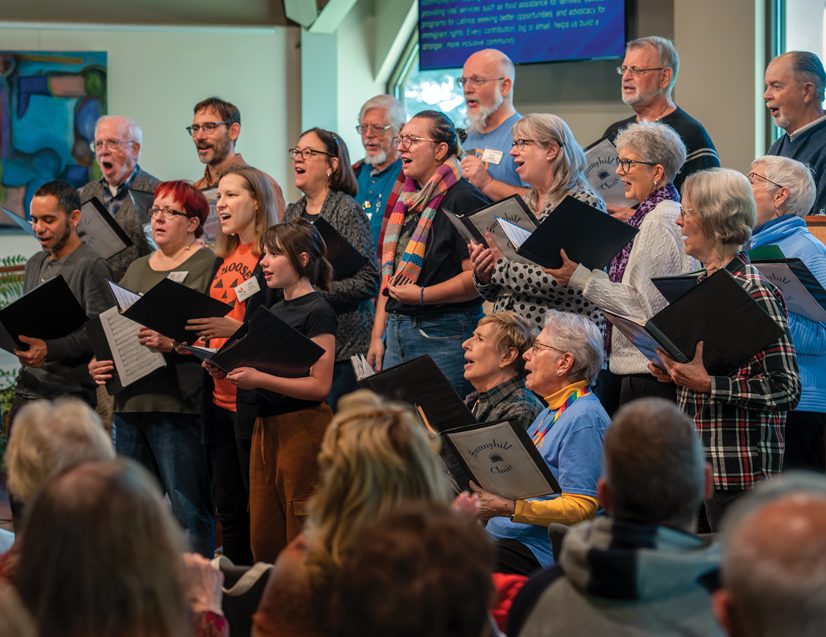
1240 Washington Road
Year Established in ML: 1965
Current Membership: 350
Peak Membership: 350
The church clusters of Mt. Lebanon
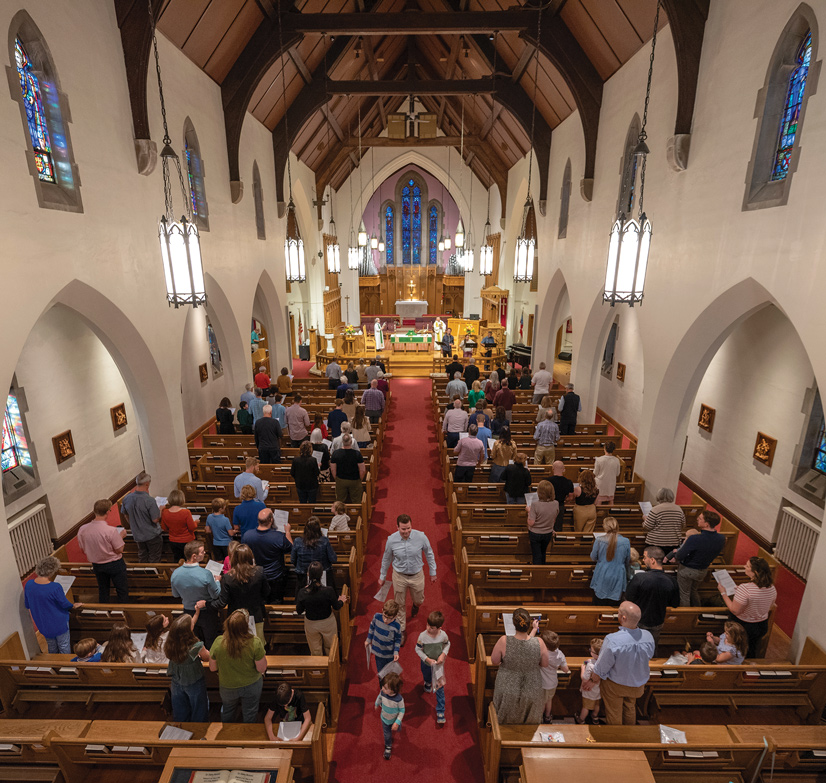
1066 Washington Road
Year Established in ML: 1925
Current Membership: 1,815
Peak Membership: 3,082 (1972)
The sweeping changes in America’s religious landscape, along with some rancorous theological disputes, have resulted in three broad clusters of churches along Washington Road.
Two of the churches — St. Paul’s Episcopal and the Unitarian Universalist Church of the South Hills — are pointedly progressive in their theological emphasis.
Rev. Noah Evans, the rector at St. Paul’s, said when he arrived eight years ago, membership was sitting at around 1,100 people, and has now risen to 1,800. He attributes that to the church’s inclusive message.
“This is a church community that is deeply committed to a radical welcome to all people just the way they are,” he said. “In this time in our nation and in our community, having a church that emphasizes inclusion of all people — well, there is a great resonance with that.”
The Unitarian Universalists started as Christian denominations, but today, they do not officially identify as Christian, and they continue to espouse progressive positions on social justice issues.
Rev. Jim Magaw, the pastor at Sunnyhill, said his congregation has also been growing over the past decade, from 170 to 350 members. Housed in the former 1920s Sunnyhill mansion, the church reflects the changes that have reshaped the American religious landscape, he said.
“I think that for every trend, there is a countertrend. And I think as people have found in the past couple of decades that the religious traditions in which they were raised no longer spoke to them, they have either gone into more conservative traditions or have sought more progressive communities. We’re lucky because we’re in a really visible place in Mt. Lebanon. I think people who didn’t feel as welcome in other traditions have sought us out.”
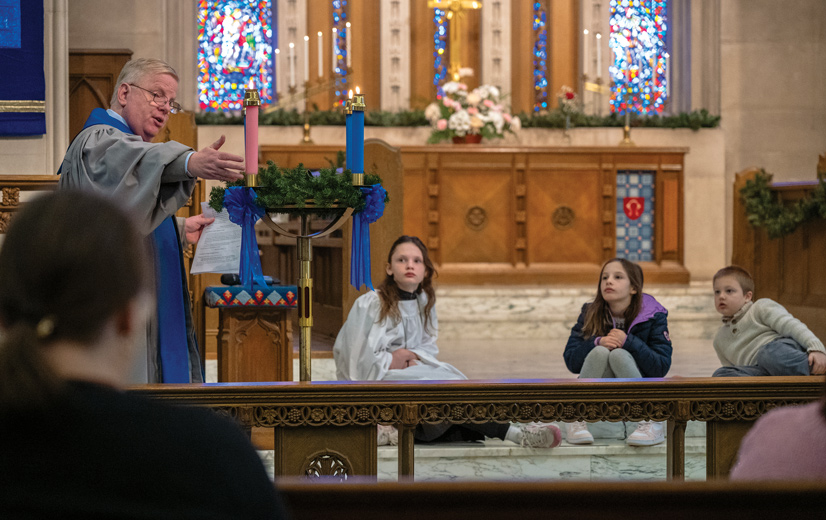
3319 W. Liberty Avenue
Year Established in Dormont: 1911
Current Membership: 1,116
Peak Membership: 3,186 (1959)
The big tent churches
The majority of the Washington Road Protestant congregations — Mt. Lebanon United Methodist, Southminster Presbyterian, Mt. Lebanon Lutheran— along with St. Michael the Archangel, include worshippers who range widely on the political spectrum.
Sometimes called purple churches, because they have a mixture of red and blue political adherents, these congregations face the challenge of trying to achieve a sense of unity amid diverse political and theological views.
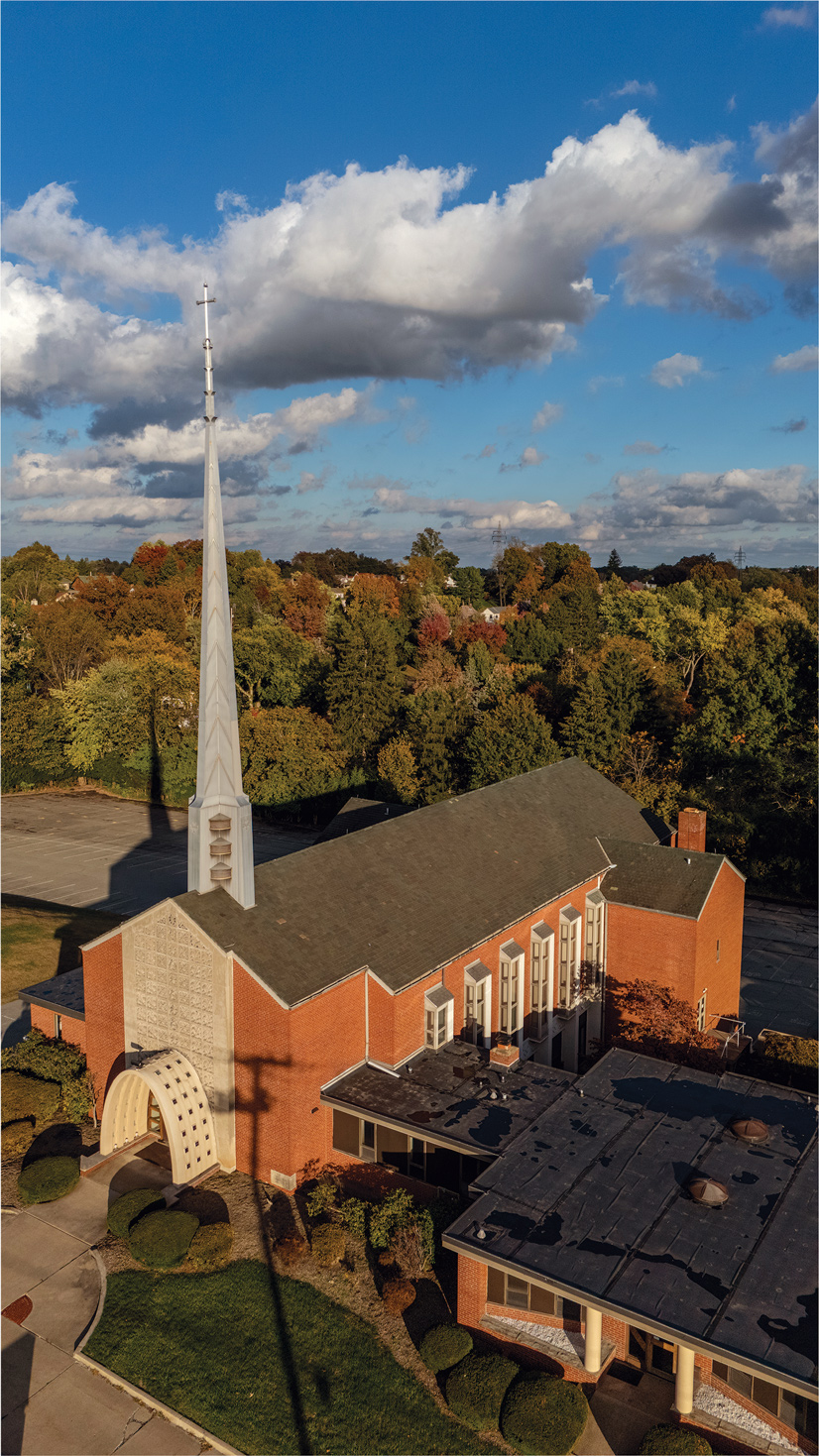
975 Washington Road
Year Established in ML: 1925
Current Membership: 932
Peak Membership: 1,281 (1965)
Rev. Tom Strandberg, the senior pastor at Mt. Lebanon United Methodist, witnessed his denomination become the most recent battleground over gay ordination. Within the past few years, many United Methodist congregations left the denomination because of that issue, but his church stayed.
At the same time, he believes the church is called to emphasize the issues that unite people, rather than those that divide them.
“Our congregation is not of one mind [in support of] same-sex marriage and LGBTQ persons receiving ordination. But the thing that really unites our people is that Jesus said the greatest commandment is, we love God and love one another, and therefore, we want to focus on doing that.”
Rev. Dan Merry, the former longtime pastor of Southminster Presbyterian, said that congregation “was always a big tent church. It had people who were quite conservative and quite progressive, and a bunch in the middle. I used to say to them, this is what the kingdom of heaven will look like.”
Judith Sutton, a children’s librarian who serves as an elder at Southminster, describes herself as a lapsed Catholic who decided one Sunday not to go to Mass, “and thunder and brimstone didn’t come down on my head.” After she started to attend Southminster, “one reason I stuck with it was because it’s a big tent church.”
Alan Trivilino, a lay leader at Mt. Lebanon Lutheran, describes his congregation as a “faith-based, sacrament-centered church that welcomes all, and we embrace anyone who seeks an environment like that.”
Mt. Lebanon Lutheran is one of the congregations that celebrated its 100th anniversary last year, “and we’re looking at this as a motivation for how to move forward into the next 100 years. We’re very aware we would not be here if it were not for the vision of those who came before us.”
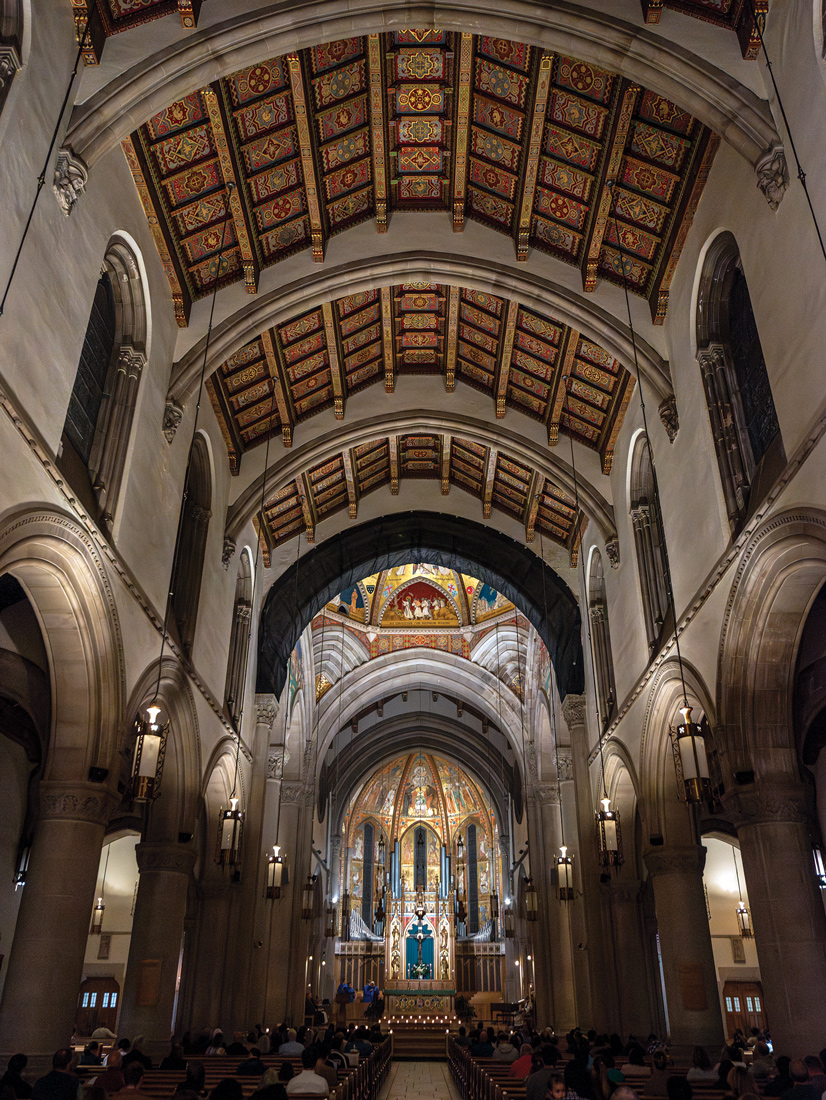
St. Bernard’s Catholic Church
311 Washington Road
Year Established in ML: 1919
Current Membership: 2,166 (Mass attendance)
Peak Membership: n/a
Because St. Michael the Archangel’s members are assigned to the parish, that by definition can encompass worshipers from very different political backgrounds. But Rev. Brian Welding, the pastor at the parish, said “I tend not to look too strongly at ideological issues; I look at what is my faith and what is my duty as a priest to hand on the faith without compromise.”
He sees the church’s challenge as being less about divisions over certain social issues, and more about a struggle between the religious realm and the secular world.
“A weak Catholic church can’t compete with the secular world,” he said. “If we don’t present the faith and present it strongly, we can’t compete.”
The conservative pair
Finally, two of the Washington Road churches exemplify the disputes that have driven church schisms in recent decades, most notably over the issue of ordaining and marrying gay people.
Beverly Heights Presbyterian and Mt. Lebanon Evangelical Presbyterian both left the main denomination, the Presbyterian Church USA, over those issues.
Beverly Heights was the first to depart, in 2007, and Mt. Lebanon, then known as Mt. Lebanon Presbyterian, followed five years later.
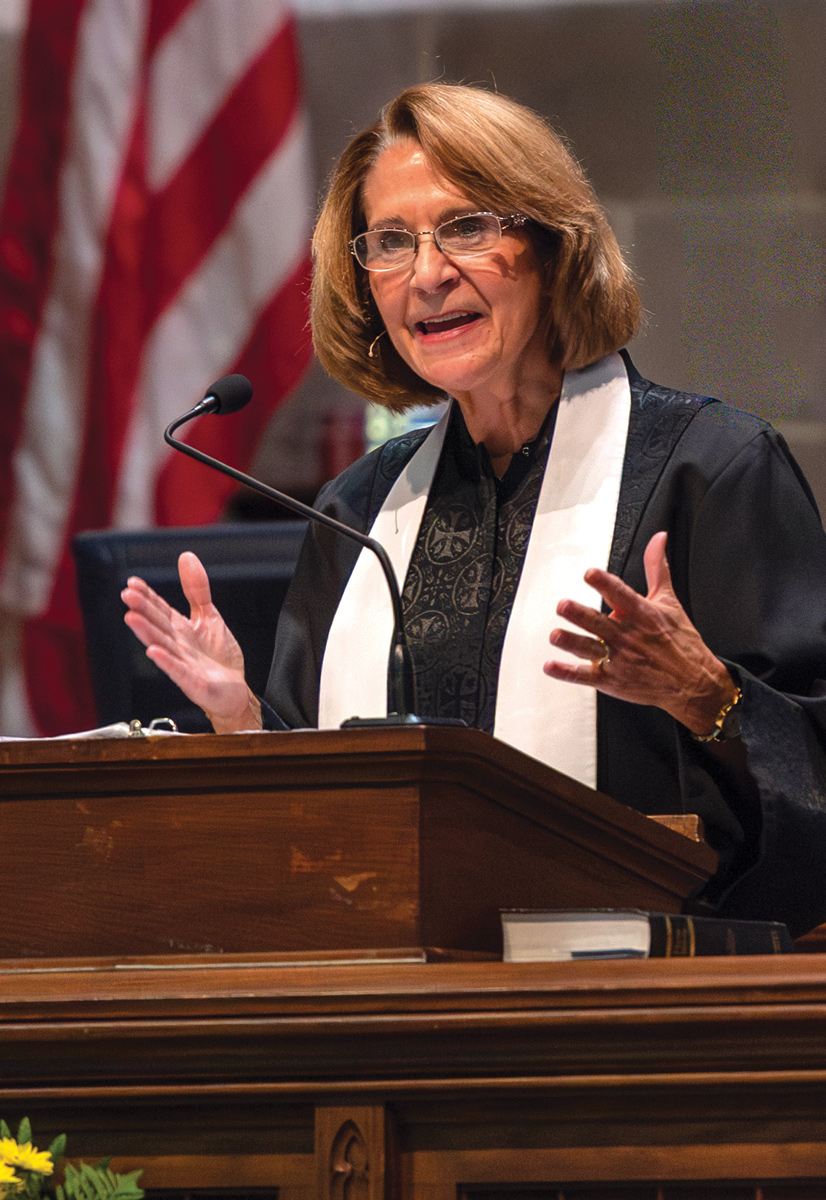
255 Washington Road
Year Established in ML: 1929
Current Membership: 200
Peak Membership: 2,961 (1960)
Rev. Poteet said that when Mt. Lebanon Evangelical made that decision, it lost about 30 percent of its members, who disagreed with shifting to the more conservative Evangelical Presbyterian Church. It had just started to recover from that setback when COVID-19 hit. The pandemic caused membership losses in many congregations — when in-person worship was halted to prevent the risk of infection, many worshipers never returned after the doors reopened.
For a church that had already been through disruption, the pandemic was a double blow.
The church now has about 200 people in worship each Sunday, about 20 of whom are foreign-born congregants, which is important for her personally because her career included working in Europe and Africa for World Vision in the 1990s. She echoes Merry’s statement: The growing diversity, to her, is “what the kingdom of God looks like.”
Even though her denomination opposes ordaining gay people to leadership positions, it does permit women pastors. And yet, when she arrived in 2017, the church lost several more members who disagreed with a woman serving in the pulpit.
While gay ordination was hotly debated at the time the church decided to leave the PCUSA, it is not an ongoing issue in the life of her congregation. “What we focus on now is what does it mean for us to live in a godly, honorable way.”
Beverly Heights Presbyterian, in the meantime, has been through even more theological upheavals.
Tom O’Boyle, a former Pittsburgh Post-Gazette editor who is an elder at the church, said that the current pastor, Rev. Nate Devlin, was faced with internal dissension in 2020, initially because some influential members disagreed with the church’s decision to go back to live worship services just two months after the start of the COVID pandemic.
The disagreements escalated into an investigation by the Evangelical Presbyterian Church, and in October 2023, Devlin resigned his position with that denomination, and the church then voted to leave the Evangelical Presbyterian Church as well.
The congregation does not belong to any denomination currently, although O’Boyle thinks it may choose a new denominational home at some point.
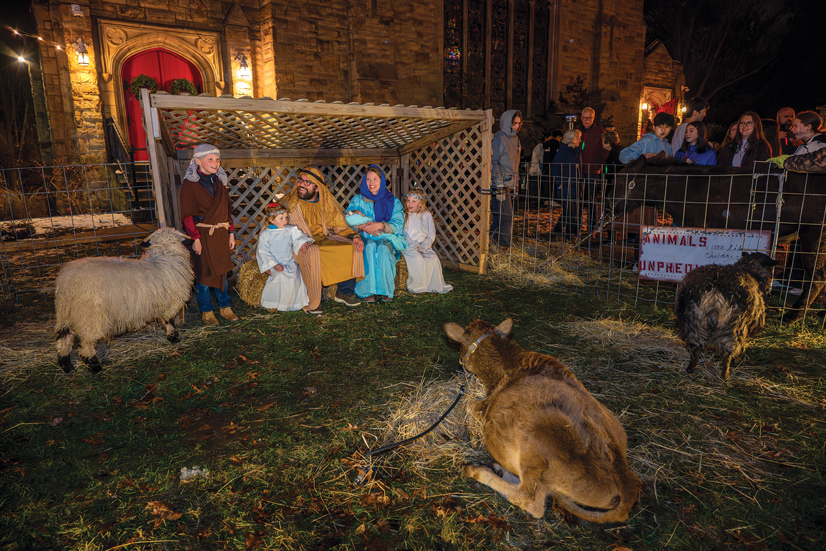
1207 Washington Road
Year Established in ML: 1929
Current Membership: 180
Peak Membership: 1,592 (1959)
Beverly Heights, which averaged about 300 weekly worshipers when Devlin became senior pastor in 2018, now has a congregation of about 180, but O’Boyle says it is slowly starting to rebuild, and much of the influx is younger families.
“We believe that a distinctively Christian character and gospel is relevant to today’s world, now more than ever,” he said. “What I see happening in our church is that we have a lot of young families who are having lots and lots of children. I think that having lived within the social liberalism of recent decades and experiencing some of the downside of that through divorce and other family problems, they yearn for something that is a throwback, and we are the only truly conservative alternative in the South Hills.”
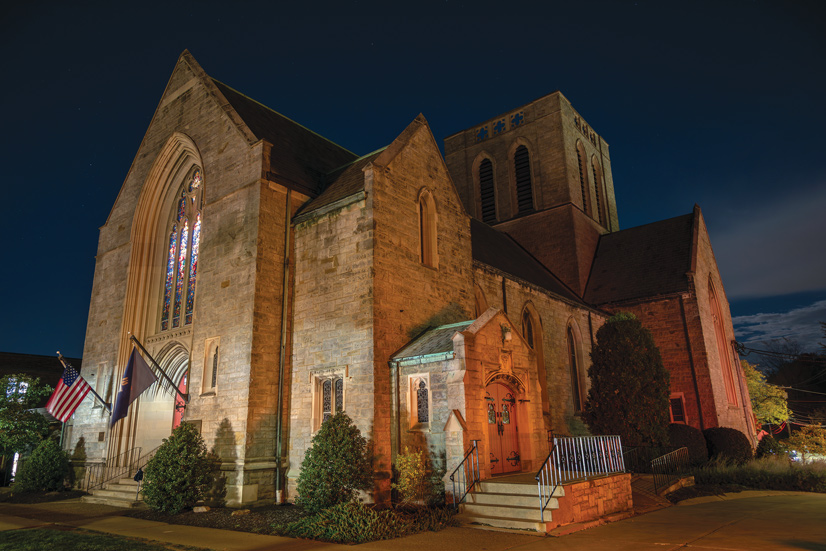
799 Washington Road
Year Established in ML: 1925
Current Membership: 820
Peak Membership: 2,930 (1962)
What does the future hold?
Campbell, the Notre Dame professor, said the changes the Mt. Lebanon churches are going through reflect many of the trends he sees in Christianity in America.
Campbell said the long-term decline in worship attendance among mainline Protestant churches has probably plateaued for now. The Catholic Church in the U.S. has maintained steady numbers because of Latino immigrants — a trend that has had much less of an impact in Pittsburgh.
If the mainline church does grow at all, it’s likely to keep getting more conservative, largely because many progressive young people associate Christianity with right-wing politics and want no part of it.
Still, congregations like St. Paul’s and Sunnyhill will be able to provide a haven for younger families who want a place with progressive social values. “Individual congregations like those can carve out a niche for themselves and do quite well,” Campbell said.
Campbell doesn’t see a widespread religious revival on the horizon. “I do not rule out the possibility that there might be some religious resurgence, but it’s very unlikely that whatever happens will bring the U.S. back to where it was in the 1950s. The secularization is now intergenerational. You now have a large number of millennials and Gen Z members who have had no experience with religion whatsoever.”
While the churches of Washington Road seem fairly stable for now, there is no guarantee that some of them won’t have to close, just as the Christian Science church did several years ago.
If that happens, said Geoffrey Hurd, a member of St. Paul’s and a board member of the Historical Society of Mount Lebanon, one thing is certain — the property won’t sit vacant. “If any of these churches throws in the towel, someone will be there scarfing it up, because with Mt. Lebanon real estate, they’re not making it anymore.”
Editor’s note: Corrected on Monday, March 2 to correct inaccurate quote.