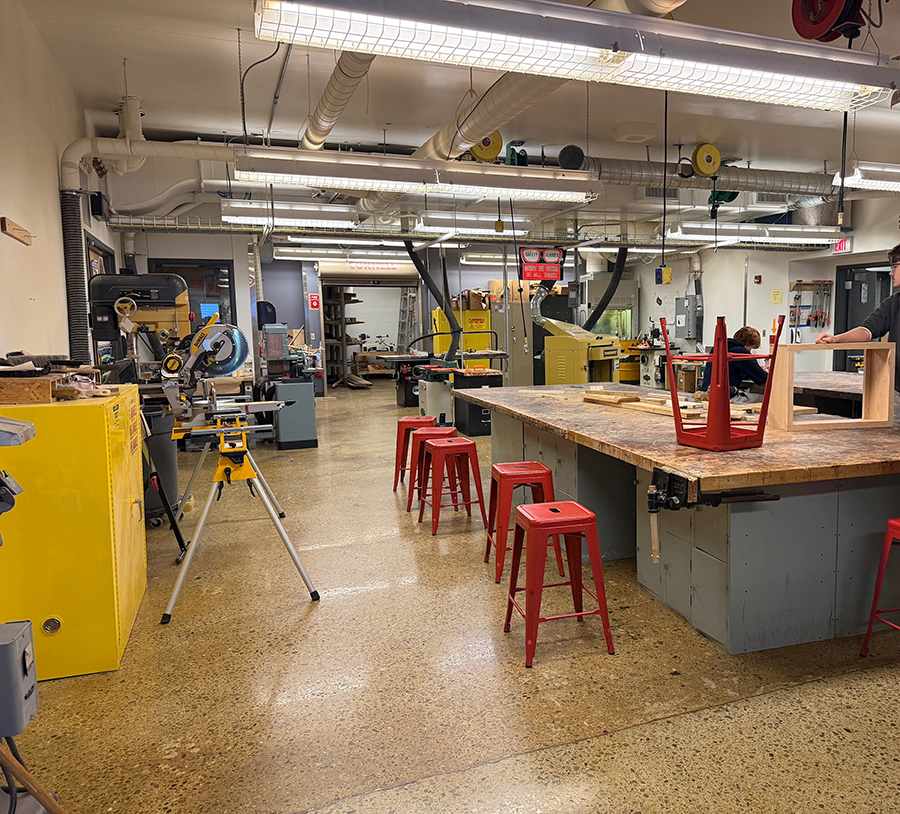
The hallways of the practical arts department at Mt. Lebanon High School feel maze-like, connecting classrooms of students who are planning, drafting, building, coding and creating.
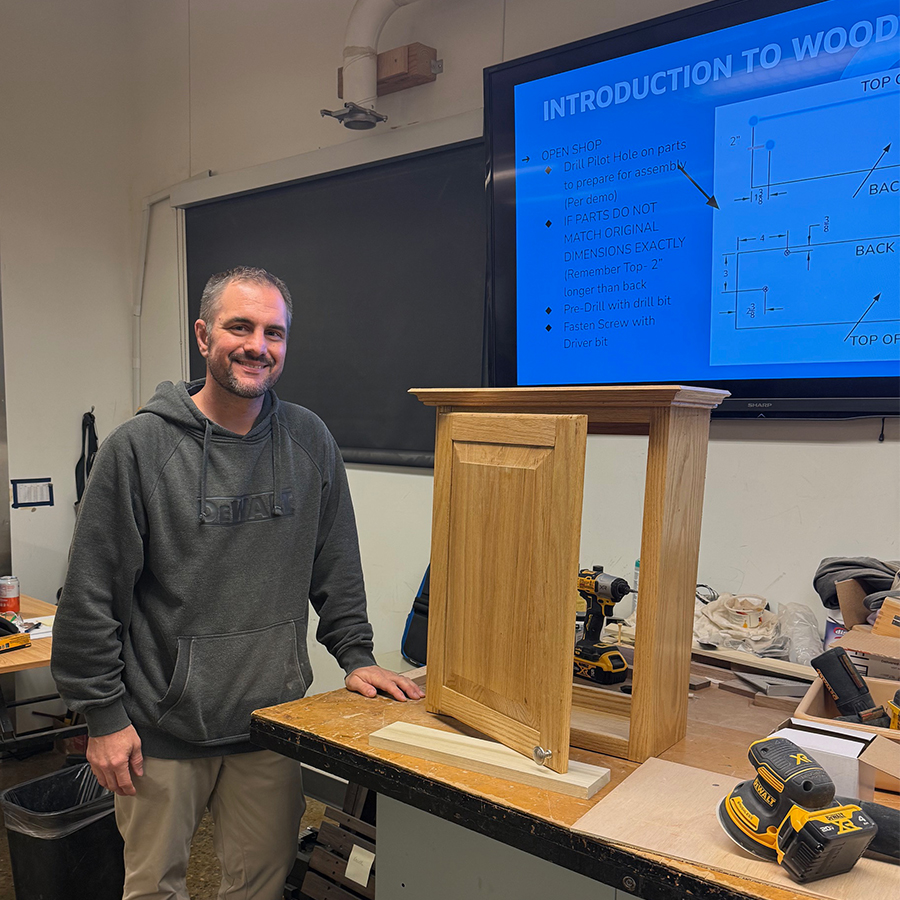
Greeted by smiling teachers and students, teacher Thomas Shultz navigates through each space with ease, highlighting student-crafted cabinetry, basketball-dunking robots and a laser printer used to create custom projects. During the last 15 years, Shultz has taught many courses, including computer-aided design, robotics, woodworking and applied engineering.
The practical arts Shultz teaches emphasize both utility and art, prompting students to craft projects that fill a need or solve a problem.
“We use computers and ChatGPT to help find solutions, but I also think it’s important for students to have troubleshooting and practical skills to give them a much greater sense of pride and value,” Shultz said.
With the integration of AI into learning environments, hands-on skills are sometimes set aside in favor of quick solutions. Shultz believes that classes like woodworking can fill in some gaps and provide practical benefits.
Having a father who was a carpenter helped Shultz create the vision for his classroom. “Growing up, my father taught me a lot of things. After getting married and having kids, I saw value in doing those types of things at my own house, then realized how important it is to have the next generation be able to do so too,” Shultz said.
Teachers in the technology education department understand that students come to class with varying experience levels. They meet students where they are, often starting with beginner and safety skills.
In addition to the classes Shultz teaches, the department offers Cisco information technology courses in which students take apart and reassemble a personal computer, as well as graphic design courses that teach Adobe software and screen printing.
In these classes, students build self-confidence and develop a baseline for various life skills. “Students are probably not going home and making a robot that will pick up a ball and put it into a basket in practical application, but eventually they might show their own kids the introductory stages of robotics and building,” Shultz noted.
In woodworking courses, students are “learning how to use a hammer, use a drill, know the difference between a drill and a driver and how to assemble things together. Not only are they using the tools, but they should be able to read blueprints, too. Every skill has the ability to be expanded upon,” Shultz said.
In technical courses, teachers incorporate new or free versions of apps and programs that students can use after high school. “We take pride in trying to stay up to date with technology, projects or scopes that the world is moving to. We see how we can implement maybe a smaller or different version of that project to help prepare kids for college or the workforce,” Shultz said.
“Even if they don’t take the multitude of skills that I’ve hopefully been able to pass on to them, the class may have helped guide them to something that they realize they wanted to be,” Shultz said. “When you see a kid who’s clearly nervous, maybe questioning why they agreed to sign up, but then see not only their interest level through their engagement, but the relaxed look on their face when they succeed, it is certainly a great thing.”