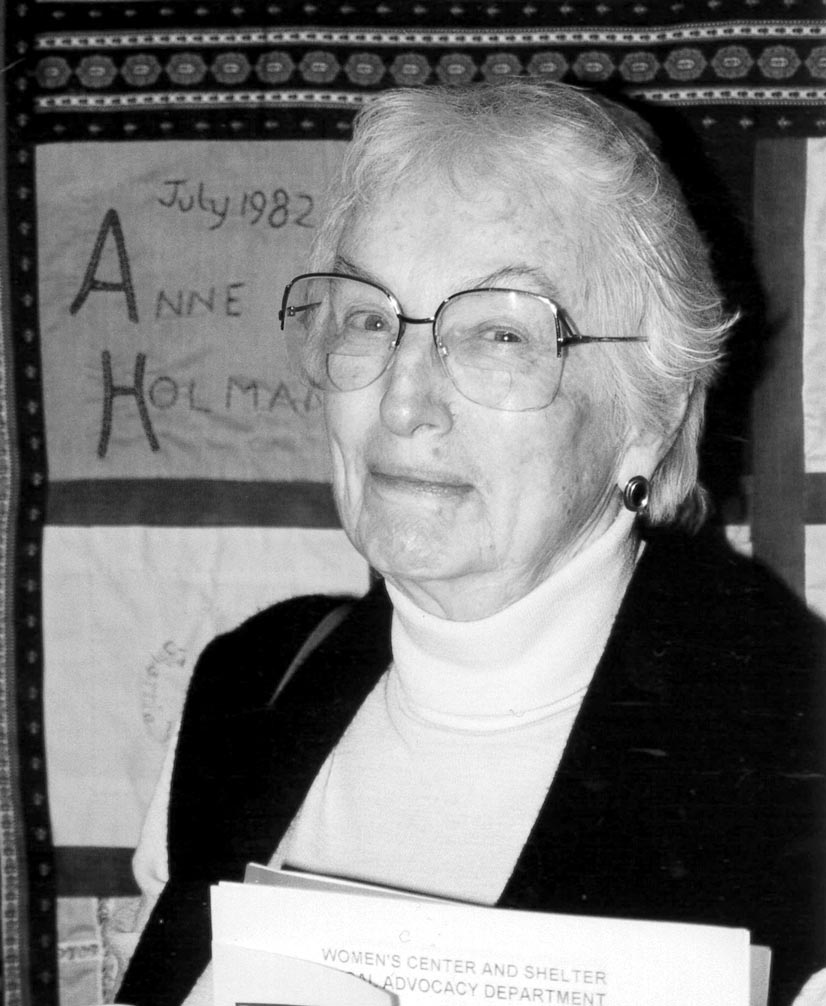
For decades, 180 Woodhaven Drive was a refuge. Cuban evacuees, runaway teenagers, abused women and children, they all flocked to the home of Ellen and Arthur Berliner and their four children.
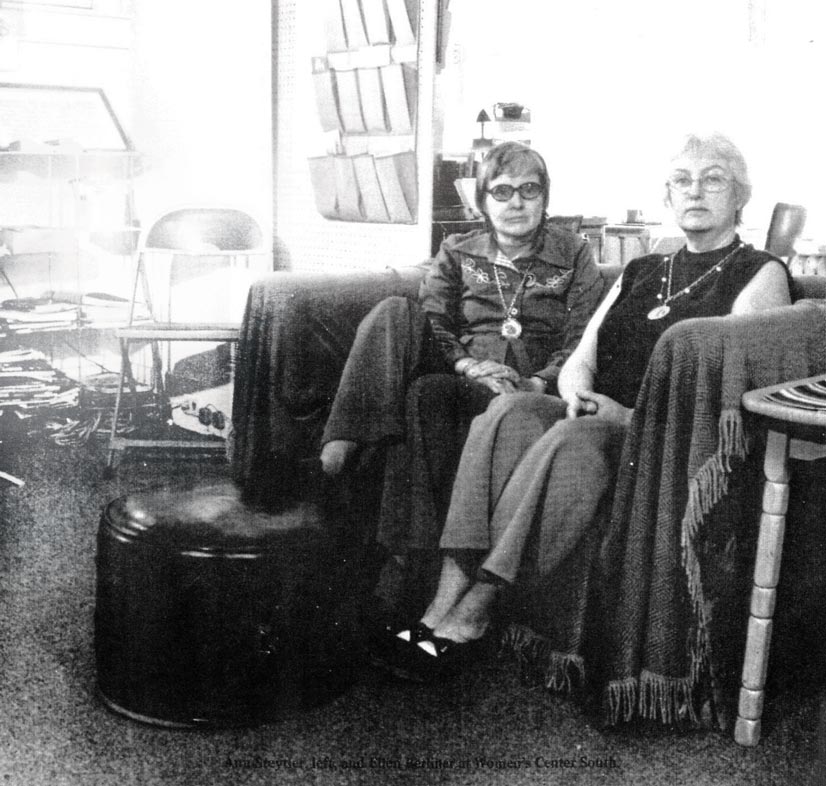
Opening her own home to those in need was a prelude to Ellen founding the Women’s Center and Shelter of Greater Pittsburgh, alongside Anne Steytler, in 1974.
“She was very brave and very compassionate,” said Lauren Quas, Ellen’s youngest child. “Whatever the situation was, she did not get rattled by the messiness of life.”
Quas and her siblings were constantly introduced to new people and experiences during childhood. “It was pretty exciting. There were always things going on. My mother was a traditional mom for a percentage of the time — we had sleepovers and in elementary school we would come home to fun little lunches,” she explained.
Her mom hosted the annual Woodhaven Pancake Breakfast in her front lawn for kids on the last day of school. Churchgoers, neighbors and even strangers filled the wraparound brick front porch with laughter, songs and games year-round. The doors were never locked.
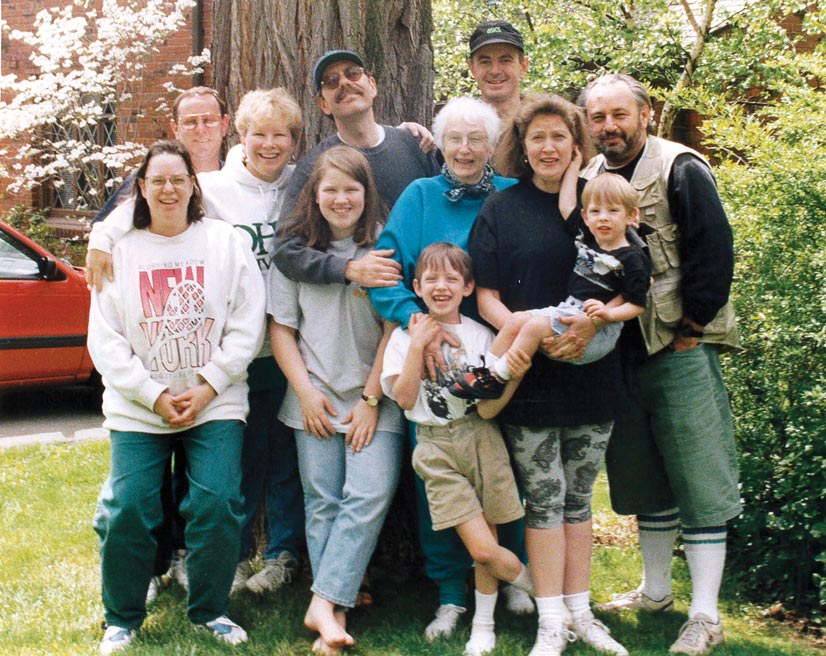
“I was used to a lot of people in our home, because our home was the meeting place. Even with the kids on the street — if we were all doing something, everybody needed to be at Mrs. B’s house,” said Quas.
The Berliners were active members of Southminster Presbyterian Church (where Quas later got married). They planned many events and summer camps on the Woodhaven porch. Christine Berliner said that in the mid-’60s, her mother was instrumental in starting a cultural exchange among Southminster and other churches in the Pittsburgh area.
Quas recalled after one year of the church exchange, Southminster voted not to continue the program, to her mother’s dismay. “She didn’t want to spend time changing minds; she was too busy moving forward.”
As Ellen’s social and racial activism grew, she and several other members of her church left to create their own group called the No-Church Church (NCC).
“She and other people that were in that exchange program from very different churches got together and decided they wanted to put their efforts toward what they felt was important socially,” explained Christine.
The NCC met in Mt. Lebanon Park on Sundays for potluck dinners, where everyone was welcome to share a meal and socialize. Quas said they “sought out people in need … people who didn’t fit the Mt. Lebanon mold.”
Larry Schardt, a student at Mt. Lebanon High School in the ’70s, attended these potluck suppers. After one of many violent incidents at home, Schardt fled to Mt. Lebanon Park, crying with nowhere to go. The NCC adults took note and asked him to join them for dinner. “They adopted me, this wayward kid,” Schardt recalled.
“I had no hope of going to college, because we had no money. The No-Church Church encouraged me to at least apply.” They raised enough money to get him through his first semester at the University of Pittsburgh at Bradford in 1972. “That changed my life,” he said.
He studied there for two years, then finished his bachelor’s, master’s and doctoral degrees at Penn State University. He became a sustainability and ecosystems professor at Penn State and authored several books.
Schardt wanted to repay them, but the group said to pay it forward instead. He started the Rock ‘n’ Roll Scholarship at the University of Pittsburgh at Bradford to help other young people go to college. Without Ellen and the NCC, he said none of this would’ve been possible. “She was such a great role model.”
Schardt was just one of the many people Ellen helped. During the Cuban Revolution, she opened her home to a refugee, whose nickname was Pepe, for 18 months. While separated from his own family, Ellen welcomed him into hers. “My parents became entrenched in his world and culture,” said Quas.
Ellen grew up in Southern California, so she knew some Spanish. Christine recalled her practicing those Spanish skills with Pepe during his stay.
During Christmastime, they hosted a traditional pig roast in their backyard with homemade Cuban cuisine to make Pepe a little happier during the holiday without his family. Once Pepe’s family made it to the United States, he moved out of the Woodhaven Drive home with them and went on to have a successful career in banking and investments, Quas recalled.
Ellen opened her home to many others just like Pepe, from abused women with children seeking shelter to teens with alcoholic parents. Some came from other areas of Pittsburgh, while others lived just a few streets away.
“She knew that in this beautiful neighborhood that we call Mt. Lebanon — that was the most wonderful place to grow up — she knew that there was another facet that all wasn’t pretty and perfect,” said Quas. “I could just tell from her actions that she knew she has to seek out the people who didn’t acclimate quite as well, for whatever reason.”
Ellen spearheaded so many causes during her lifetime — too many to detail here — including The Meeting Place in Manchester, a community center to help people facing eviction, and the South Hills Association for Racial Equality.
But she is best known for co-founding the Women’s Center and Shelter of Greater Pittsburgh (WC&S) with Anne Steytler in 1974, one of the first shelters in the United States for abused women.
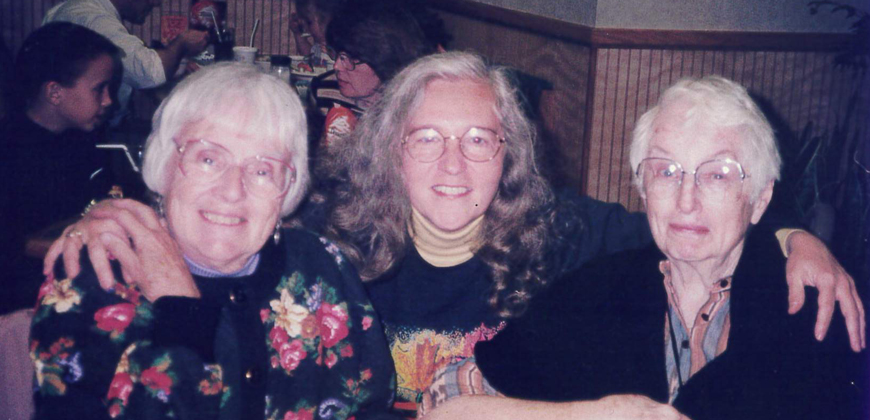
Quas remembered her mom and Steytler spent hours refining grant proposals in the early 70s, around the time they rented a house in Dormont for women in need. At first, it was simply a social outlet for women, but they quickly realized about 40 percent of the women showing up experienced domestic violence and needed a place to stay, according to Nicole Molinaro, president and CEO of WC&S.
Molinaro, a Mt. Lebanon resident, said understanding of domestic violence then versus now is like “night and day.” Prior to the WC&S founding, there were no shelters or legal protections for victims of abuse in Pittsburgh, let alone widespread understanding of domestic violence.
“People didn’t even talk about domestic violence at this time,” Quas recalled. “My mother would always tell me, ‘Don’t think domestic violence just happens in the poor neighborhoods. It is across all socioeconomic segments.’”
Molinaro said the two women’s decision to start a shelter was both innovative and forward thinking. “We were one of the first six domestic violence programs in the whole country and they all kind of cropped up around the same time, you know, with the backdrop of the civil rights movement and the women’s movement,” she explained. “It was really because of Ellen’s vision — of what needed to happen and how we needed to help and support women — that that it came into existence.”
In the decades since, WC&S has grown from a grassroots to a professional organization that serves more than 7,500 people each year. And even though “women” remains in their name, WC&S provides services for all genders.
Molinaro said while the shelter only houses women and children (but they will work to find safe housing for men in potentially lethal relationships), its programs, including counseling and legal or medical advocacy, are open to anyone, regardless of gender identity.
“Domestic violence crosses all boundaries. You know, it doesn’t matter what your religion is, it doesn’t matter where you live, whether you have a job, your socioeconomic status, your race, your ethnicity, nothing. None of that matters.”
When Quas was a teen, her mom included her in various trainings at the shelter. On one hand, she was able to help; on the other, Quas thinks it was her way of teaching her teenage daughters to look for red flags. “I think raising girls, she wanted us to realize that [domestic violence happens], and she sometimes would tell us just enough detail, for the two of us to know what flags to look for.”
Those red flags, according to Molinaro, include controlling behavior, attempts at isolation, jealousy, excessive blaming or shaming, threats of harm or violence.
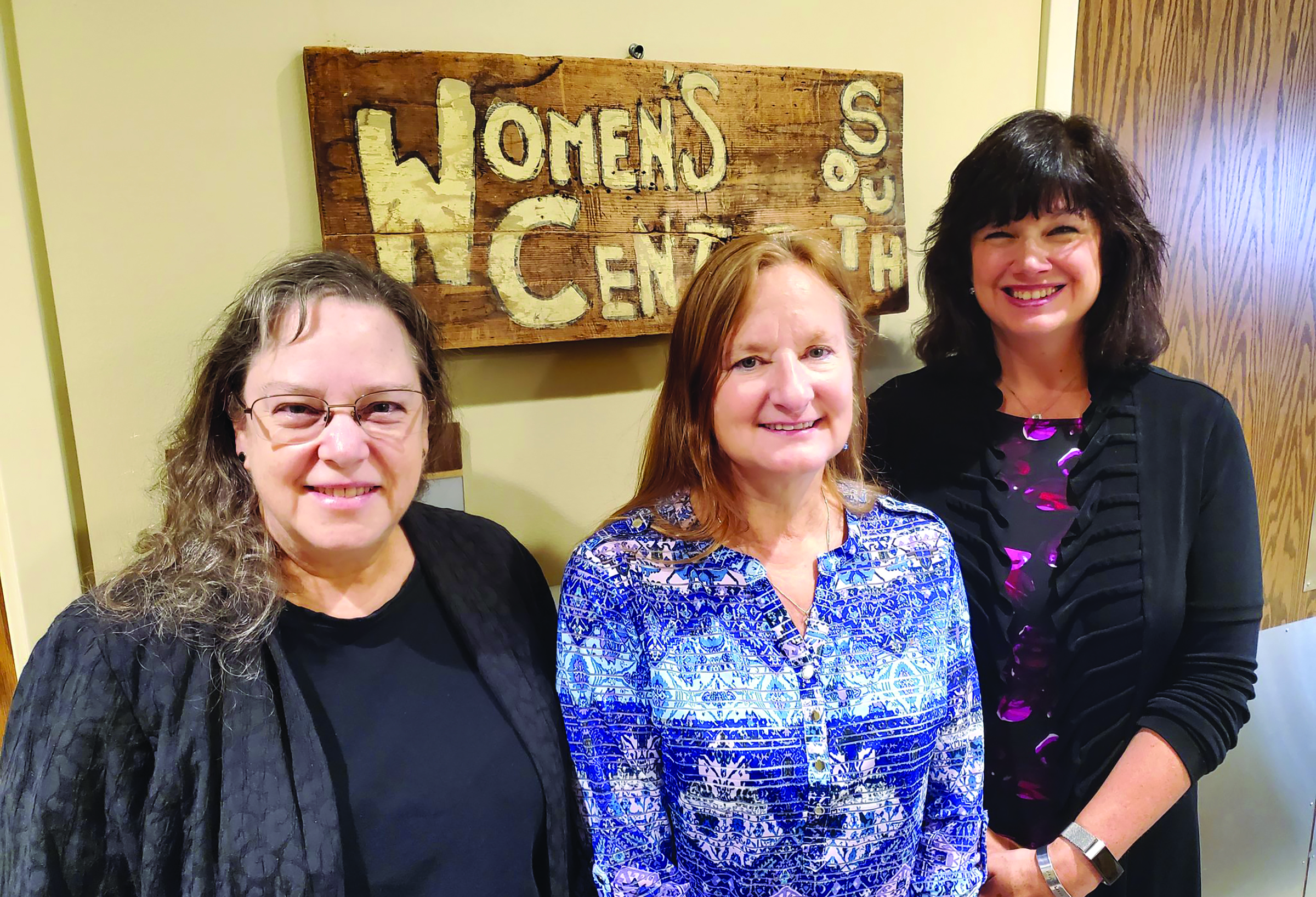
“I feel like we all owe so much to our founding mothers because they had the vision of what needed to happen, and then they made it happen. And that’s pretty incredible considering the climate of the early ’70s,” said Molinaro.
While she was running the WC&S, Ellen’s husband, Arthur, was diagnosed with Alzheimer’s disease. She created the Pittsburgh chapter of the Alzheimer’s Association to help him and others impacted by the disease.
Arthur died in 1992 from complications of Alzheimer’s disease. Ellen stayed in the Woodhaven Drive home for several more years on her own, until 1997. She died in 2011 at St. Clair Hospital at the age of 90.
“I’m sure she was a lot for the typical Mt. Lebanon resident to process,” Quas noted, “But I think some people really admired her from afar because they knew that she was doing good things.”
Ellen’s longtime neighbors, the Morgans family, certainly admired her, but not from afar. When she moved, they gave her a parting gift: a wooden box painted with an image of her house, filled with written memories. The Morganses wrote about the pancake breakfasts, hangouts on the front porch, paper-dress fashion shows and a Christmas tree that lost all its needles as Ellen refused to take it down until her son returned from war. The final note in the box read: “We remember the day you sold your house and changed the neighborhood forever.”