



Bringing them back
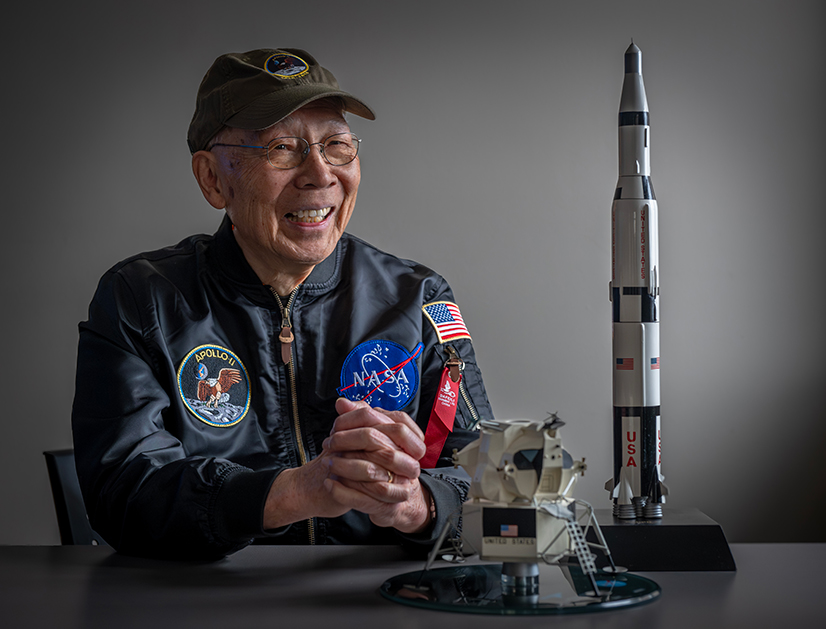
The third moon landing was supposed to be a breeze.
“We were so successful with Apollo 11 and Apollo 12, we said, ‘Ah, it’s just a normal thing,’” Mt. Lebanon resident Edward W. Lee recalled. “We were thinking the same thing until we got the call from them.”
As immortalized in slightly altered form by Tom Hanks in the film Apollo 13, the notification from astronaut Jack Swigert to mission control was: “OK, Houston, we’ve had a problem here.”
So began an anxiety-ridden couple of days for Lee and other members of the mission’s support team as they worked on figuring out how to bring Swigert and fellow crew members Jim Lovell and Fred Haise back to earth intact.
On April 13, 1970, an oxygen tank in Apollo 13’s service module exploded, causing a power outage in the adjacent command module, which was intended to serve as the astronauts’ main living quarters. As a result, they had to move.
“They were going into the lunar module that we designed,” Lee said. “And that’s not designed for three people living continuously.”
In his job as a thermal control engineer with module manufacturer Grumman Aircraft Corp. of Long Island, New York, Lee had an integral role in developing the type of landing craft that took Apollo 11’s Neil Armstrong and Buzz Aldrin to the moon’s surface on July 20, 1969.
The pair traveled only about 60 miles through space after the lunar module Eagle detached from the orbiting command module Columbia, piloted by Michael Collins.
By contrast, the Apollo 13 astronauts ended up trekking nearly a quarter of a million miles in Aquarius, their lunar module. All the while, Lee kept watch.
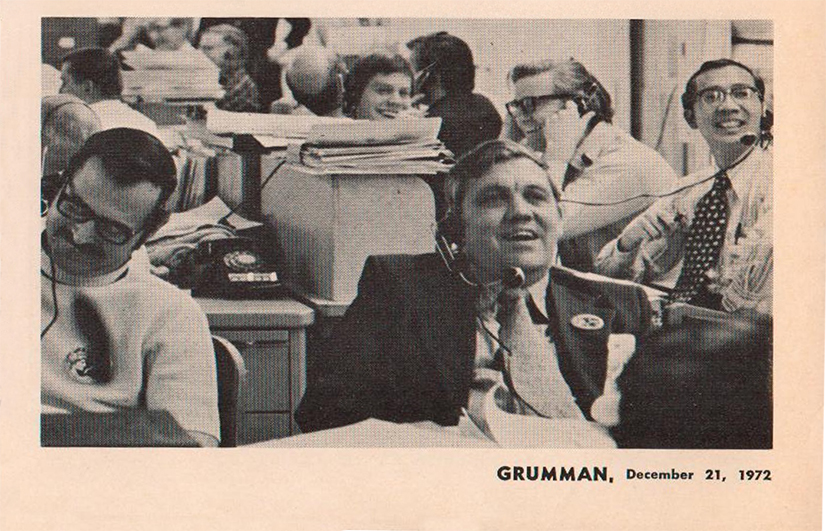
“My job was to make sure that the environment was a livable environment for them,” he explained. “We managed to minimize the oxygen that they were allowed to use and made the temperature as low as they could survive so as to save energy, to keep them alive long enough to come home.”
When the crew returned to the command module for re-entry through the earth’s atmosphere, concerns lingered about the effectiveness of the craft’s heat shields, with a lengthy communications blackout exacerbating the situation.
“Once they were in the ocean, we felt much better,” Lee said. “It turned out that they were still in good spirits. President Nixon said hello to them all, and we were so happy that they were all saved. We were proud that we contributed to the success of Apollo 13.”
A native of China, Lee showed an early aptitude for science and mathematics, and his adviser in high school suggested he pursue a career in engineering. Following his graduation from City College of New York, he was hired by Seattle’s Boeing Airplane Company, which paid for his master’s studies at the University of Washington.
While at Boeing, Lee worked on the company’s 1962 proposal to NASA for the design of a craft that would be capable of landing on the moon.
“And then Boeing lost and Grumman won, so I immediately applied to Grumman. I knew what was required already, even though Boeing didn’t win. That means I’m a loser,” he joked.
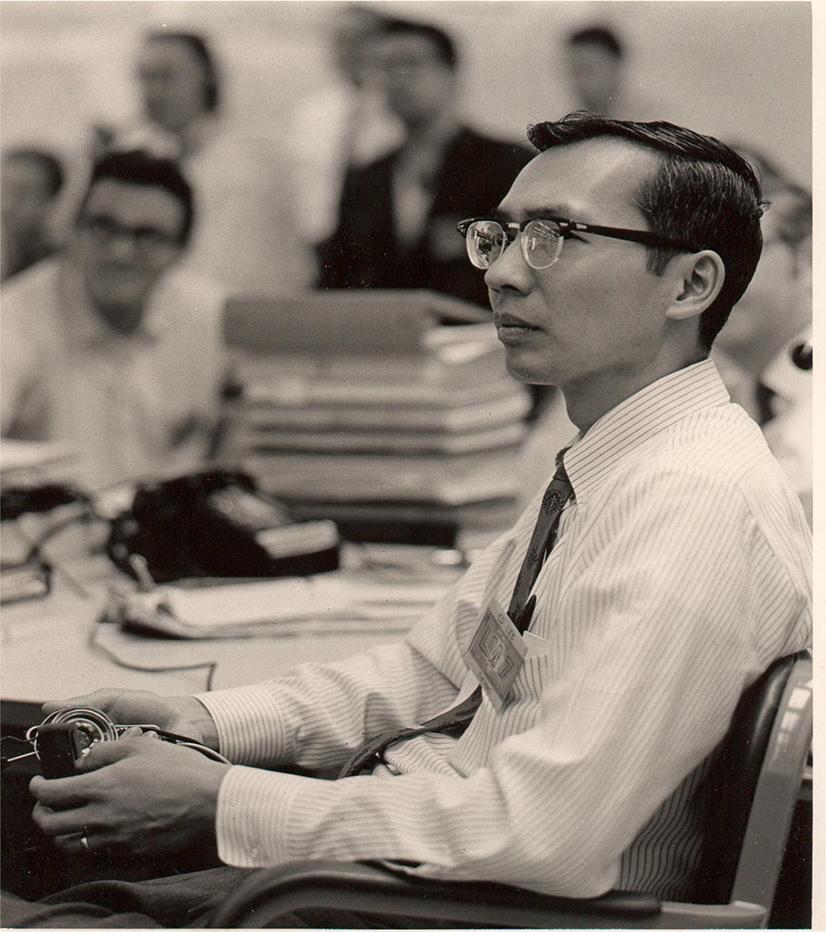
Having only suppositions of what to expect for a lunar mission, the Grumman team had an abundance of questions to answer.
“What kind of environment do we have? How are we going to get there? And how are we going to be able to live in that environment?” Lee said. “So all those things, step by step, we were able to work it out.”
Their success was witnessed by some 650 million TV viewers worldwide as the Eagle landed securely in the Sea of Tranquility, allowing Armstrong and Aldrin to stroll on the moon’s surface, collect samples and plant the American flag before heading back to the Columbia.
“While people were enjoying,” Lee recalled, “I was worrying about the temperature.”
As he monitored the Eagle from Long Island, his main concern was that lunar dust covering the engine could cause it to contain heat and adversely affect the module’s plumbing system: “There was still some residual liquid in there that could vaporize and burst, and damage the vehicle.”
In November, 1969, Apollo 12 astronauts Pete Conrad and Alan Bean repeated the feat of navigating their lunar module without incident, leading to the belief that the next such mission would proceed just as smoothly.
After they recovered sufficiently from the Apollo 13 near-tragedy, Lovell, Haise and Swigert visited Long Island to present Lee and other Grumman employees with certificates acknowledging their roles in salvaging the mission. Attached to each was a piece of the thermal blanket that protected Aquarius from space’s temperature extremes.
And inscribed on the certificates was a heartfelt message from the astronauts: “Thanks for a job well done!”
 Full Story