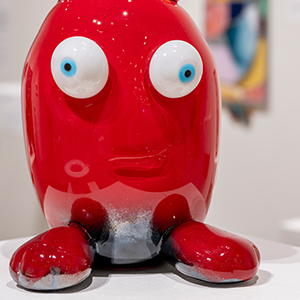




Creatures with character
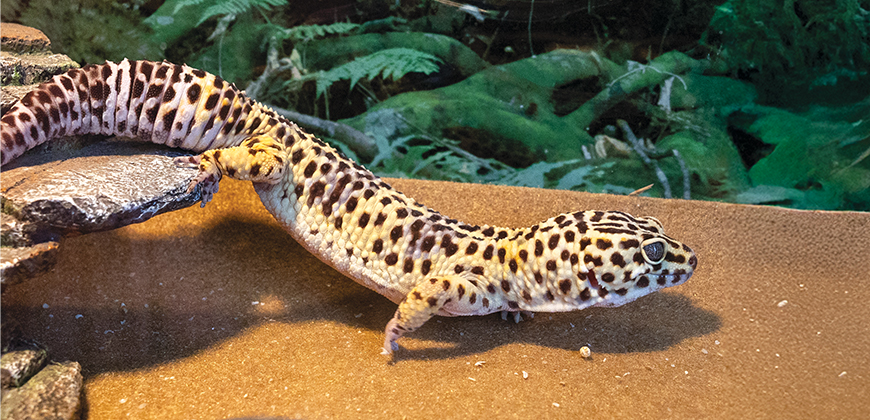
Take a walk into Chris Reidenbaugh’s home on McFarland Road and you’ll find a diverse array of pets, from catfish to chinchilla.
“Mt. Lebanon is a really great pet community. The big thing with exotic pets is: Do your research so they don’t end up in a rescue.”
In Pennsylvania you can own the following animals without a permit: non-venomous snakes, reptiles, lizards, birds, domestic cats, dogs, hamsters, guinea pigs, mice, rats, fish, ferrets and small crabs.
But what about, say, a squirrel? The rules get more complicated.
Exotic pets must have a permit from the commonwealth. According to Pennsylvania Code, applicants need two years of direct experience working with the species from an approved facility, a letter of reference and documentation. The Pennsylvania Game Commission handles the permits, which cost $50 per year.
Some nearby communities, including Moon Township, ban specific exotic pets. City of Pittsburgh residents cannot own more than five pets in one home, and in 2021, City Council banned ownership of crocodiles and other reptiles over public safety and invasive species concerns (i.e. people releasing crocodiles in rivers and neighborhoods).
In Mt. Lebanon, zoning code permits residents to own chickens, bees and farm animals, with limits on the number of animals and how much space they need. (Check out the sidebar for more on these specifications.) As far as exotic animals go, the municipality says you can own them if they don’t violate federal, state or county law.
Once you get through the bureaucratic tape, what is it like actually owning an unusual pet? Mt. Lebanon residents with feathered, furry and scaly friends weigh in.
Mark Simpson
Chickens: Rent or own?
Chickens are no longer farm exclusive. Post-pandemic, backyard chickens have grown in popularity, especially due to the skyrocketing cost of eggs. Americans own roughly 85 million backyard chickens, making them the third most popular pet in the country, behind dogs and cats.
Owning chickens is a year-round commitment. In the winter, the coops and water require special heaters and weatherproofing. Owners must tend to the flock each morning, whether it’s sunny and 65 degrees or snowing and below freezing. That’s why some Mt. Lebanon residents have opted for a lower stakes commitment: renting chickens.
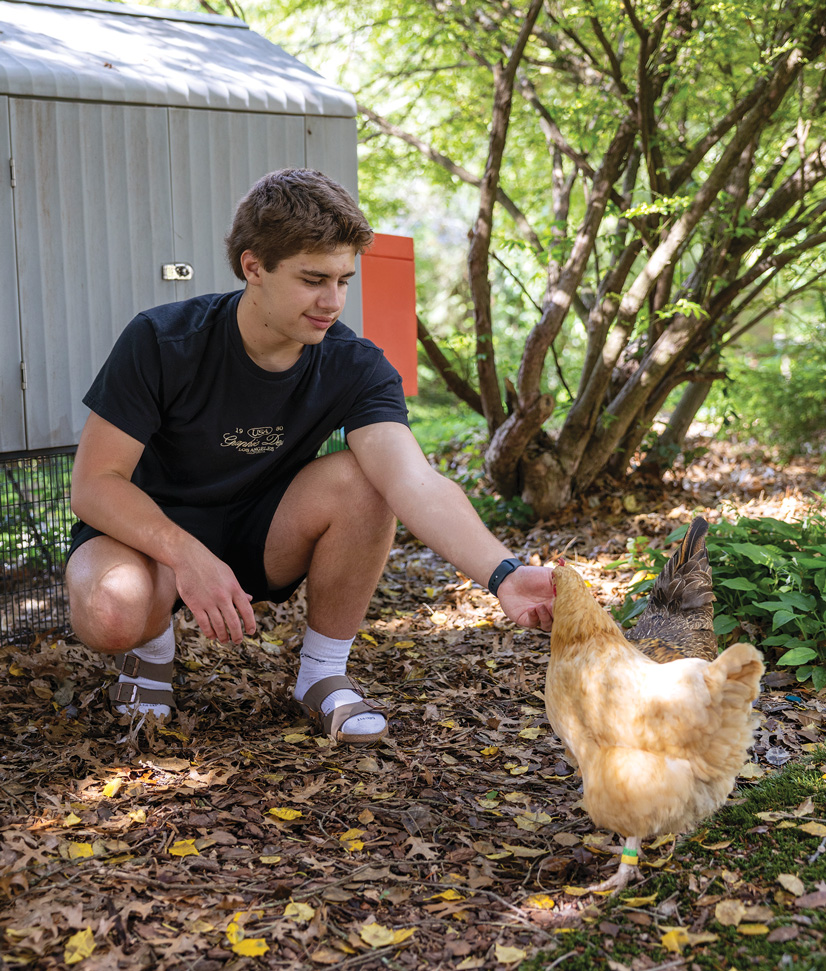
For the past three years, the Jones family on Vernon Drive has rented two chickens from Rent The Chicken. Alyssa got them as a birthday present for her son, 16-year-old Barrett, who enjoys caring for animals. “I’ve always really liked chickens. They’re really pretty pets,” Barrett said.
From spring to fall, Barrett is responsible for Rhodie and Chicken Hawk. Rhodie is a Rhode Island red chicken with an all-golden coat and a friendly personality. Chicken Hawk, an Easter egg chicken that lays purple and blue eggs, is more skittish, said Barrett. While she isn’t fond of human or canine company, she loves her sister Rhodie.
At sunrise, the A.I. smart chicken coop detects light and opens the door to the main pen area. Barrett comes out soon after to replenish food and water and gather the eggs. He lets the chickens into a larger 10-by-10-foot pen, where they can dig in the dirt and plants. “They like to traverse around the yard, and they love eating ivy,” said Barrett. Throughout the afternoon Barrett checks on them and, in the evening, the chickens instinctually head inside before sunset. Barrett shuts the doors, sometimes giving them more sand and water in their coop for the night. The chickens are bathed if they’re extra dirty or muddy, but their hatred for it makes it an infrequent chore.
Alyssa said she loves the backup support for her chickens. Rent The Chicken provides tips and even responds to emergencies. When one of their chickens broke a toe, staff showed up to help.
Jason Jesso, Jefferson Drive, also gets his backyard flock from Rent The Chicken. His family started renting the chickens in 2020, when they were stuck at home during the COVID-19 pandemic and saw the opportunity on social media. “We try to eat all organic, all natural and healthy,” said Jesso. “Plus, it’s good for the environment.”
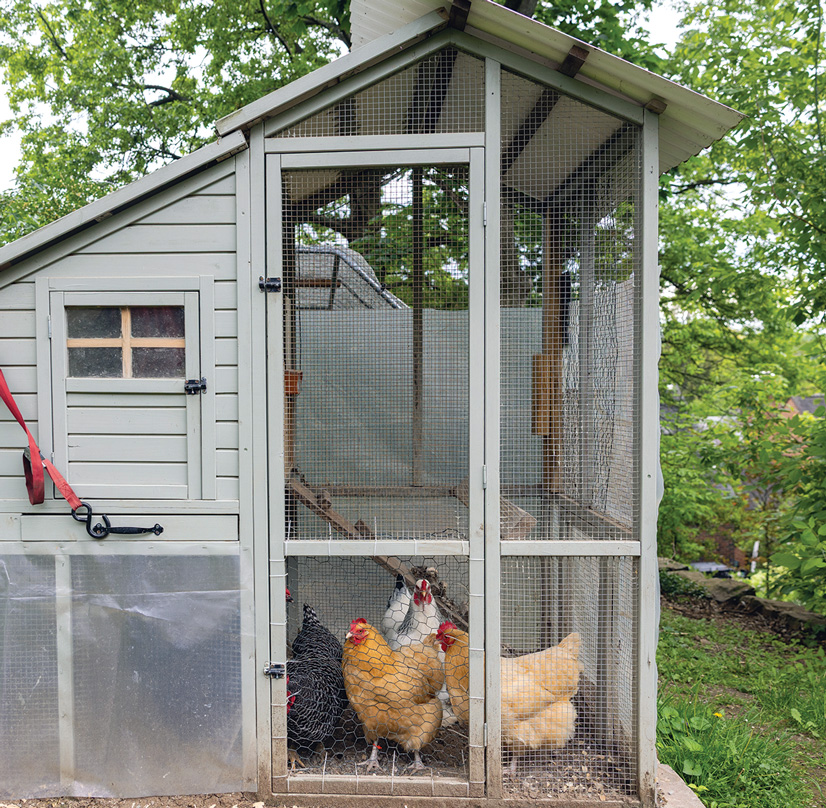
In addition to standard feed, the chickens eat leftover scraps, apples that fall from the backyard trees and other fresh produce. “What you feed the chickens changes the color and flavor of the egg, especially the yolk,” explained Jesso.
Leafy greens, grass and legumes are rich in a pigment called xanthophyll. When digested, it plays a role in egg development, resulting in darker orange and fresher tasting yolks. Feeding chickens basil and other fresh herbs can subtly change the flavor profile of the eggs, Jesso added.
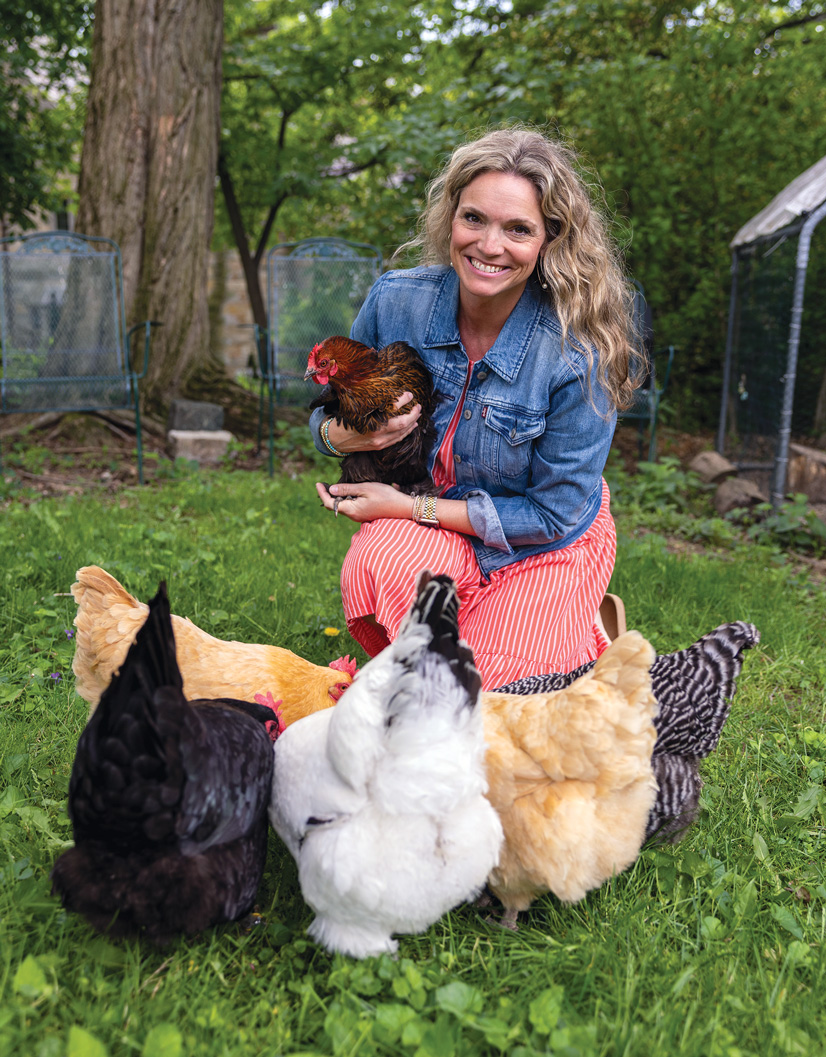
Lorien Moyer, Vernon Drive, said her six chickens have made a great addition to the family, but cautions prospective owners: “They’re a lot of work. I love them, but a lot of people do them as a trendy thing. Then they or their kids get sick of them.”
Moyer personally hatched and raised her oldest chicken, Mrs. Cluck, an 8-year-old Cochin. Her other five chickens are rehomed from people in Mt. Lebanon who could no longer care for them and put out the call on a Facebook group, The Coop – MTL.
“I’m definitely an advocate for rescuing, but it’s more than that — it’s about providing the home they should have,” she said.
Moyer and her husband, Sean, both grew up in rural areas with lots of farm animals. “Being in Mt. Lebanon is a change from how we were raised,” said Moyer. With the size of their property, chickens are the only farm animals they can own. “I would add more if I could!”
Moyer said potential owners should be aware that chickens can be very messy, require daily care and might not be as fruitful as you expect; but, if you’ve done your research and are ready to commit, they can make wonderful pets.
Scales & shells

Reptiles can be one of the more difficult pets to own, according to Bower Hill Road resident David Dorn, a veterinarian at West Liberty Animal Hospital. Humidity, temperature and proper diet are essential for reptiles to thrive in captivity. Some reptiles are easier than others.
Sonny Dunlap, Vernon Drive, got his first corn snake, Beef Stroganoff, a few years ago. Corn snakes are good for beginners — they’re curious, playful and relatively low maintenance, Dunlap said. Beef Stroganoff’s days consist of napping in a heating pad, climbing the rope bridges and railings of his terrarium, and eating one thawed mouse every five days.
On Hoodridge Drive, 14-year-old Peter Atwood cares for leopard gecko Lulu and hognose snake Freddie Spaghetti. His uncle, a science teacher and nature photographer, brought his ball python snake on a family vacation, where Atwood fell in love with reptiles.
Anne Atwood, Peter’s mom, said she enjoys the lower-commitment pets, but still, “It is important to set up a proper enclosure for your reptile with the right heat and substrate … They need places to hide, plants and a water bowl. There are a lot of YouTube videos about proper reptile care to help, like Snake Discovery Channel or Clint’s Reptiles.”

While some reptiles may appear low-commitment, consider the animal’s lifespan. When you adopt a baby corn snake, it may be the size of a pencil and require little daily care; but it’s a lifelong commitment to an animal that can grow to six feet and live more than 20 years. Before getting a new pet, you should know the animal’s dietary requirements, social needs, how much money it will cost over its lifetime, and which vet will care for it.
Dorn urges parents to carefully consider who the pet is for, and who will be taking care of it. “Some kids are intense about taking care of a pet, while others lose interest.”
Chris Reidenbaugh’s kids fall into the first category.
When his daughter, Haley Larson, was living at home, she made a successful PowerPoint pitch to her parents, asking for a bearded dragon. Larson has since moved out to attend nursing school and took the bearded dragon, Ruby, and her chinchilla, Chanel, with her.
Not to worry — there are still plenty of animals left in the Reidenbaugh house: three guinea pigs, two rabbits, three dogs, and a 50-gallon aquarium with a 13-inch pleco fish, mini sharks and other fish. Eventually, Reidenbaugh’s wife, Michele, would love to add a raccoon to the mix. But for now, they have their hands full maintaining water temperatures, algae treatments and UV filters, trimming guinea pig nails and walking dogs.
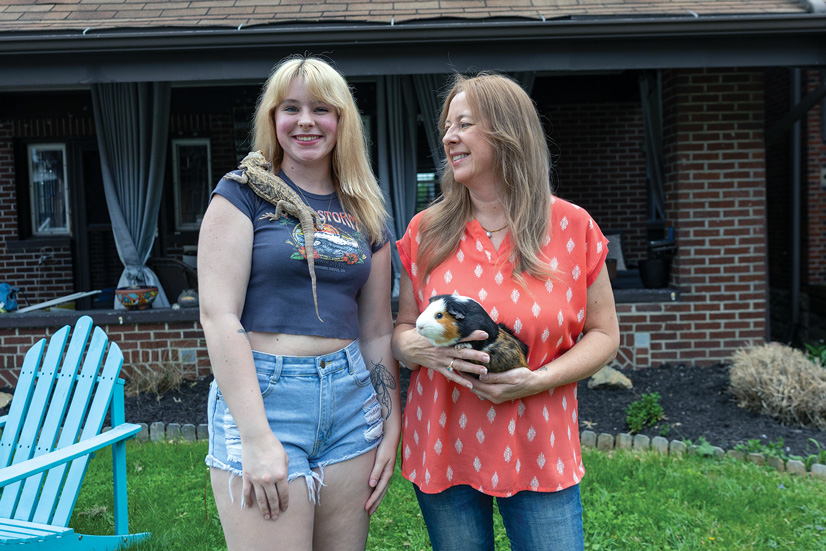
Moyer also has a multi-species home. Her leopard gecko, Snowy, was rehomed after the original owner’s son lost interest. Snowy is nocturnal and timid, happy to spend most days snuggled in her cage. Her other reptile is the opposite.
Moyer found herself looking for a Russian tortoise online after making a promise to her preschool-age son: if he earned a good behavior sticker every day for a month, he could have a tortoise. To her surprise, he earned every sticker, and she was bound to her word. A baby tortoise named Mac was soon overnighted from California. Her son is now in middle school and Mac lives in his room. Mac requires regular baths, has playdates with a nearby tortoise friend, loves to be scratched on her sensitive shell, and will likely live for more than 50 years.
The furry & feathered
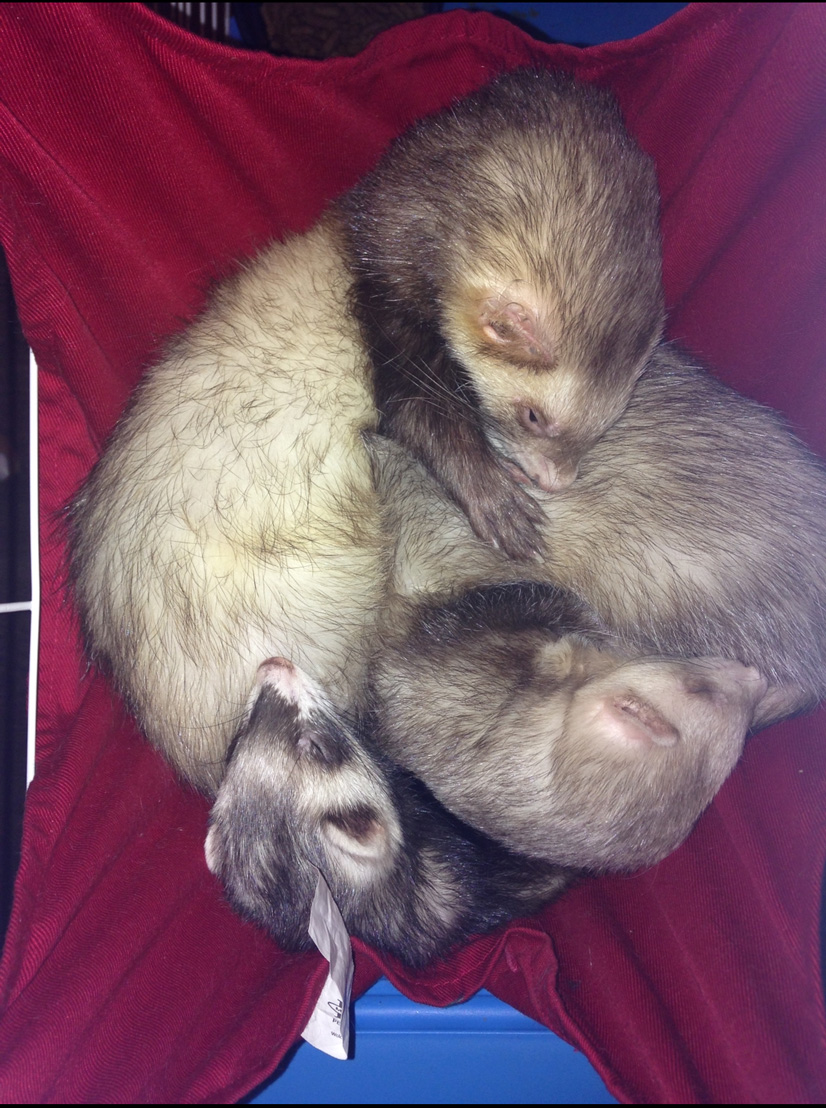
Ferrets get a bad rep.
Anastasia Angelopoulos, Morrison Drive, said the first thing people ask when they discover she has ferrets is “Don’t they smell?”
Yes, ferrets have a scent, but it can be mitigated with pet-safe tea tree oil and other remedies; but more importantly, the funny, mischievous nature of her ferrets outweigh their natural scent, she said.
Angelopoulos’ love for ferrets started in childhood. When she was 15, she tried to hide a ferret in her room. Even when they’re descented, it’s a feat to overcome their distinct odor. It took only a couple days for her mom to track down the source and return it to the store. Years later, Angelopoulos was out one afternoon with her own daughter, 15, when they saw baby ferrets at the pet store. She told her daughter that story and decided it was time for a proper redo. They bought ferret sisters Rosey and Scarlett on sight.
Over the years, they’ve had many ferrets. The small weasels don’t live very long, only 5-10 years on average, and they need companionship. So, each time one ferret passed, another joined the home. Angelopoulos said ferrets are playful and energetic when they’re awake, which isn’t often for an animal that sleeps up to 18 hours a day. They sleep inside a three-tier cage with hammocks and a litter box. They love to play with the cats and “hop around like slinkies,” said Angelopoulos. “They make us laugh — they’re just silly.”
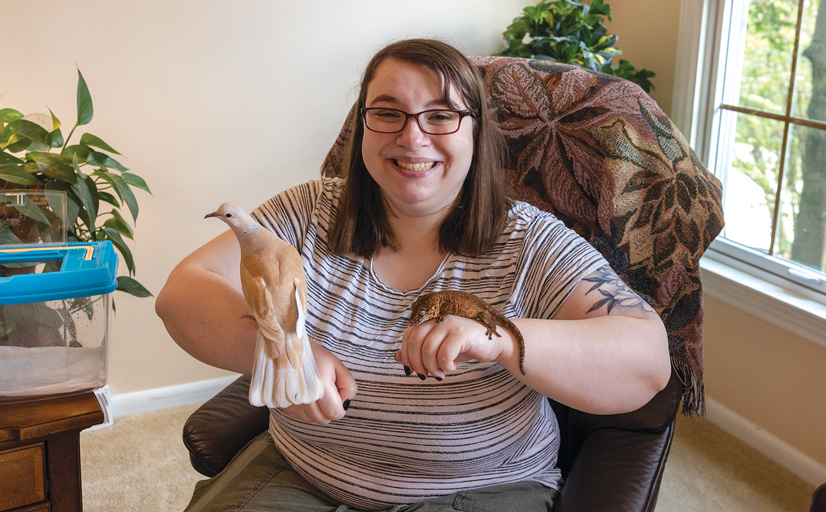
On Driftwood Drive lives a gargoyle gecko, Zuhl, and a ring neck dove, Toki. The two were hand-raised as babies and have big personalities. Lindsey Rutledge adopted Zuhl after graduating from Mt. Lebanon High School, where some teachers have classroom animals. She keeps his tank humid, misting it to help him shed, and handfeeds him a special calcium defosforate smoothie.
“He’s picky. He won’t eat insects, even though he’s a gecko and that’s what they do,” said Rutledge. Zuhl will also eat honey as a treat, but it makes him hyper, so it’s saved for special occasions. When he’s not hopped-up on honey, 8-year-old Zuhl is a calm gecko and falls asleep on Rutledge’s arm when she works from home during the day. At night, he’s active — jumping, hissing and chirping.
Toki, on the other hand, is an early bird. He sits in the windowsill each morning and talks to the mourning doves outside. “They go back and forth,” Rutledge noted. He’s incredibly friendly, with puppy-like behavior and the “zoomies.” While Zuhl happily sleeps on Rutledge while she works on her laptop, Toki pecks at her hands, laughs and hops on the floor to get her undivided attention. Eventually, she’ll settle down, nesting on the computer or sunbathing on the windowsill.
Whether you have a small dove or a giant tortoise, there’s at least one Mt. Lebanon vet to care for your unique pet. Dorn said West Liberty Animal Hospital in Dormont “will see anything people bring in — with the exception of monkeys.”
Mt. Lebanon animal ordinances
To own chickens, you must have a zoning permit from the Mt. Lebanon Inspection Department. Permits cost $85 and require two copies of a property survey, showing that you meet the space requirements. A minimum of 3,000 square feet are required for up to four chickens, plus 1,000 square feet for every additional chicken, which caps out at a maximum of 15 chickens. And they must be hens — no noisy roosters allowed.
Beekeeping is allowed, but for every two hives you must have 2,000 square feet, with a maximum of six beehives on one property. You must register your apiary with the Pennsylvania Department of Agriculture and the Mt. Lebanon Inspection Department.
Other farm animals are allowed in Mt. Lebanon for non-commercial purposes, if you have at least one acre of land. Any buildings that house the animals must be at least 50 feet from the lot line.
For more detailed information on animal-related zoning and permits, contact the Mt. Lebanon Inspection Office, 412-343-3408.
Editor’s note: This story was edited on October 1, 2025, to correct the age of Barrett Jones and the spelling of Lorien Moyer and Alyssa Jones.

 Full Story