


Firing for the first time
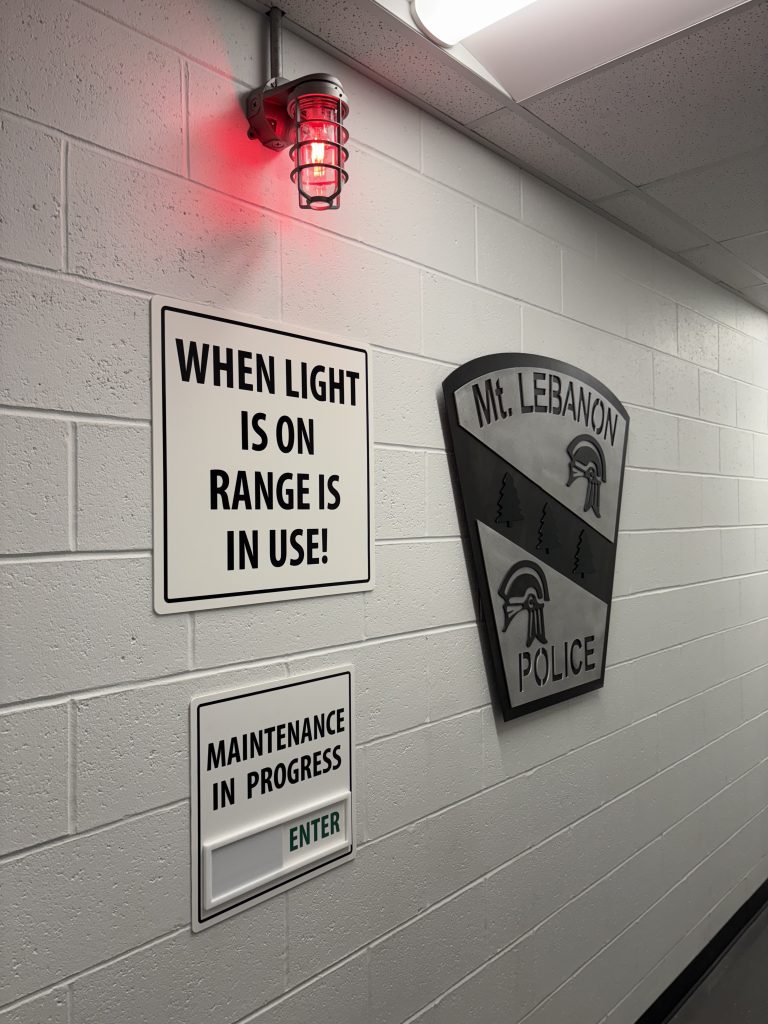
I’ve shot a fair number of guns in video games, but never in real life. Admittedly, I’ve never had much interest in being around guns and never even held one before; but when I learned we’d learn to shoot guns during the Mt. Lebanon Citizens Police Academy, I was up for trying it.
The firing range officially opened just a week before my CPA class tested it out. The facility, located near the public works campus on Lindendale Drive, is a major addition to the department’s training infrastructure.
“We’ve been waiting forever,” said Officer Ryan Miller, emphasizing the department’s enthusiasm.
During the session, officers demonstrated various less-lethal tools designed to subdue suspects.
The first less-lethal weapon people think of is a handheld canister of pepper spray, but Cpl. Grant Nagy said it’s less prevalent in policing today. Pepper spray can be inaccurate and hard to control, as there’s a high potential for it to blow back on officers. Tasers are used more frequently than pepper spray to quickly subdue a suspect.
MLPD uses the Taser 7, manufactured by Axon. Every Taser is equipped with a battery pack that records its user activity and activates the officer’s body and car cameras as soon as it’s lifted. Officers always carry a Taser, which delivers two shots per cartridge. It shoots two darts that must connect to the target to create an electrical current. The initial discharge lasts five seconds, inducing neuromuscular incapacitation (NMI). Officers are trained to avoid the chest, head and groin to prevent cardiac issues or serious damage.
Officer Miller explained that every police officer gets shocked with a Taser and pepper sprayed during training. With the Taser, he said “Time slows down. It was only five seconds, but it feels like an hour.” Still, he said he’ll take being shot with a Taser over pepper spray any day.
Miller demonstrated the pepper ball gun, which functions similarly to a paintball gun. Miller described it as “awful but very effective,” providing a means to incapacitate suspects from a distance without causing permanent injury.
“Distance is our friend,” he explained. With more distance from the danger, officers can make better decisions.
The pepper ball gun can be used to target areas around a person or even above them without direct contact. The interesting difference between the pepper ball and pepper spray: as soon as you leave the area with pepper ball powder, the symptoms stop. But with pepper spray, once it’s on your skin, the effects can last hours to days.
Next is the more intimidating-looking 40 mm grenade launcher. Designed for use during active aggression situations, it allows officers to engage suspects from up to 30 yards away. Miller likened the impact of the foam projectile to “if someone runs up and kicks you as hard as they can.”
The launcher is primarily aimed at the thigh area; however, as the threat level escalates, officers are trained to adjust their aim accordingly. The launchers can also be used to put holes in windows or doors.
After less-lethal weapon demos, officers separated us into small groups to practice shooting three weapons: the pepper ball launcher, 40 mm grenade launcher and a handgun.
First, we practiced proper handling techniques with solid plastic simulation guns. We got one-on-one instruction from an officer on where to place our thumbs and plant our feet, what to do with our shoulders, and how to find the red dot in the target indicator on our gun. I wondered how accurate my real shot would be, never having shot a gun, but the officers said the people who shoot the best targets are usually the ones with zero experience, since they have no bad habits to correct.
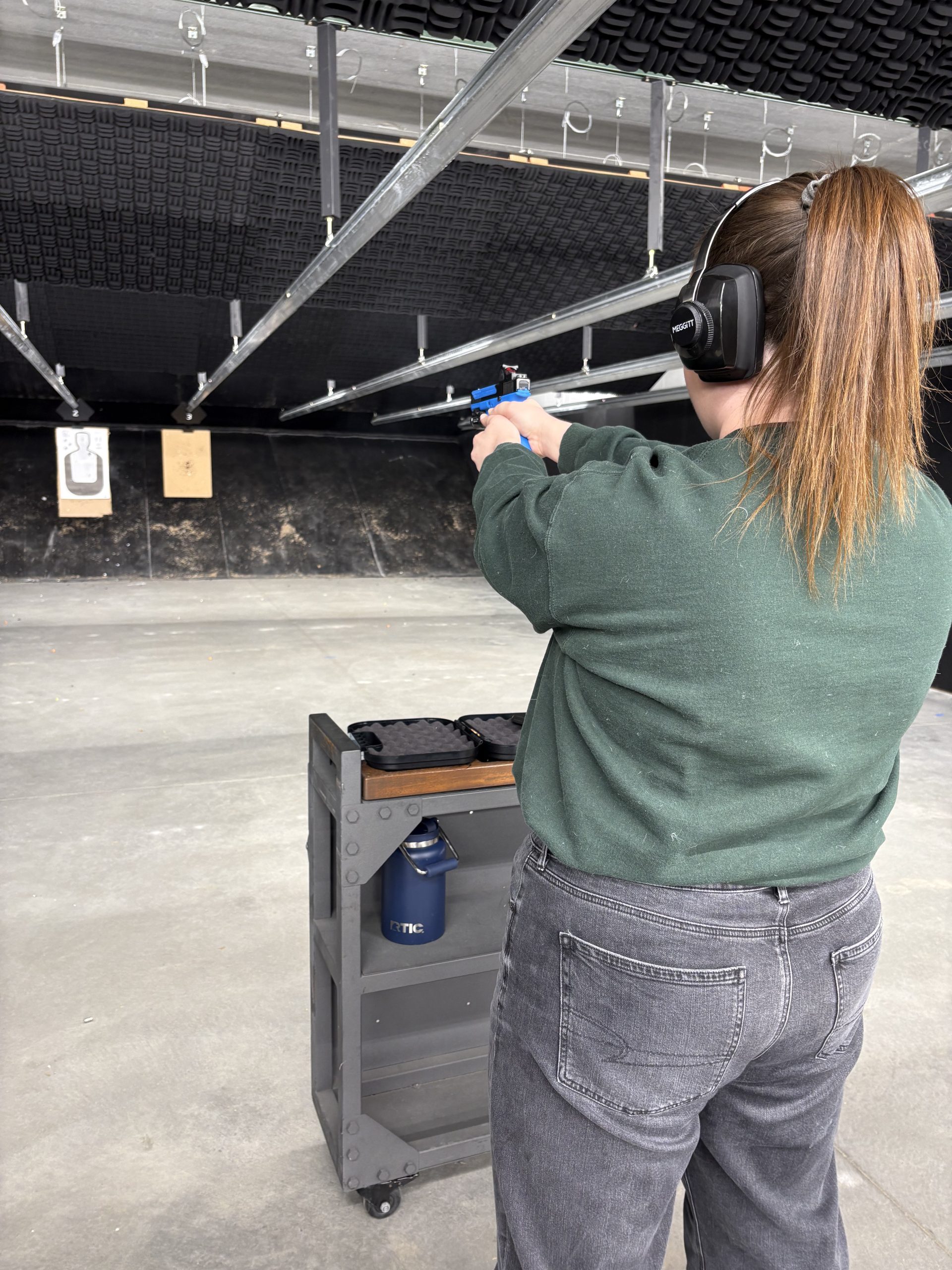
Once officers felt we were ready for the real thing, we entered the range in pairs and geared up with over-ear protection and eye shields. I shot first, starting with the pepper ball gun (which was loaded with plastic balls, so we didn’t choke ourselves). It really did feel just like a paintball gun. Next was the 40 mm launcher, which was much heavier than I was expecting. I couldn’t really see where the launcher went once I shot it, but I definitely heard its thud against the wall.
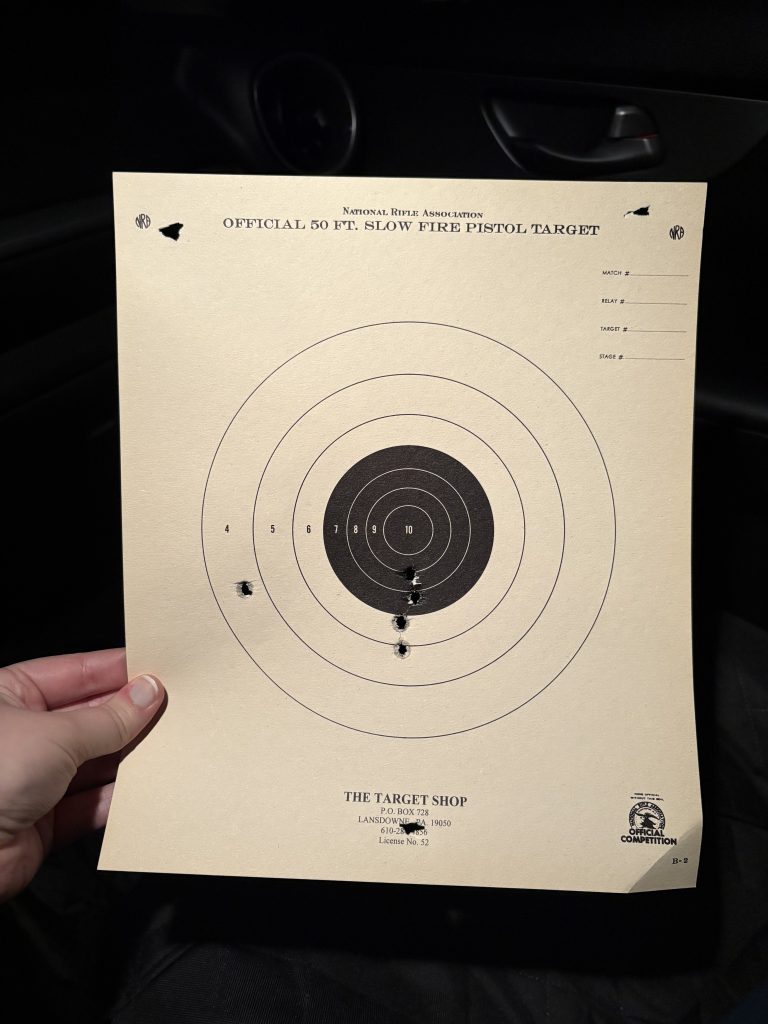
Finally, it was time to shoot the real gun. With an officer on either side, I stood in front of a black and white target. I had more trouble finding the red dot there than I did with the training gun, but once I got the hang of it, I began firing. The gun didn’t have much kickback and wasn’t really that heavy, but after firing just five rounds, my arms were noticeably shaky. I didn’t do too bad either! (Would’ve been prouder if every shot was a 10, though.)
All-in-all, it was a unique and valuable experience that I got to have with my community members and police officers. Just like every other night of the CPA, I learned so much about police training and the incredible detail that goes into their work.
For anyone interested in learning more about the MLPD or participating in future community outreach initiatives, check out the Mt. Lebanon Police Department’s website and sign up for CPA the next time it’s offered. It’s amazing just how much you’ll learn about public safety and the people who serve your community.
But as far as guns go, I’ll stick to the ones in video games.

 Full Story