


Gillen to lead Frick Pittsburgh
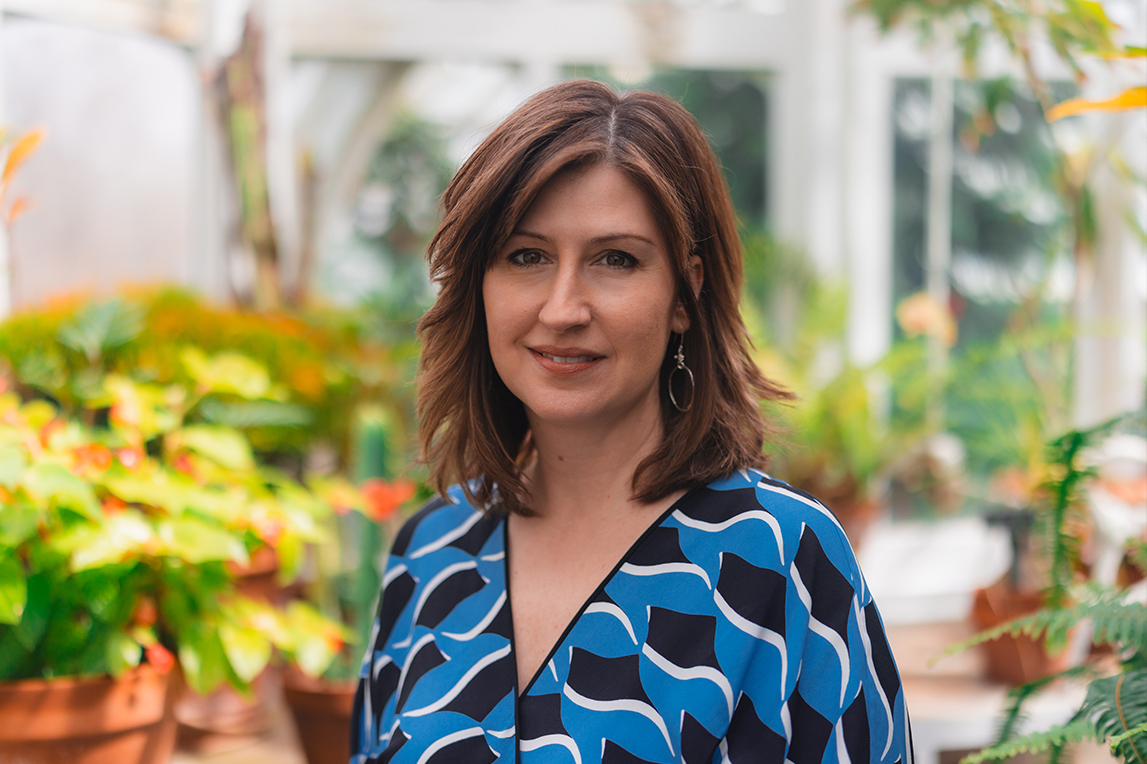
Amanda Dunyak Gillen, Scrubgrass Drive, is right where she wants to be, both at work and at home.
In April, Gillen was named executive director of the Frick Pittsburgh, capping 21 years of employment at the Point Breeze museum complex. In a press release announcing Gillen’s appointment, Frick board chair Steve Pavsner noted, “After an extensive national search, we concluded that the best person for the job was already at the Frick.”
At home, Gillen and her husband, Eric, recently celebrated their daughter, Josie’s, graduation from Mt. Lebanon High School. Josie heads to the College of Charleston in the fall. Gillen said she’ll miss her daughter, but admitted, “It’s good timing,” as both she and Josie start new life chapters.
Gillen grew up in Charleroi and graduated from Allegheny College, later earning a master’s degree in public history from Duquesne University. After an internship at the Heinz History Center, Gillen moved to the Frick, where she worked in the curatorial, education and learning departments before becoming the director of learning and visitor experience in 2013. She’s been the acting executive director since last November.
“I am beyond excited” about the appointment, Gillen said. “I take this incredibly seriously.”
The Frick Pittsburgh includes an art museum, antique car museum, a large greenhouse, café, and Clayton, the former Frick family home, spread over more than five acres between Fifth Avenue and Reynolds Street.
“We’re sort of a boutique museum,” Gillen said. “The greenspace makes us unique” among the city’s many museums, she added.
During her time at the Frick, Gillen was part of the design team behind a $15 million expansion that includes the Grable Visitor Center and a renovated Car & Carriage Museum, as well as other learning initiatives.
One of the more interesting projects came about when COVID-19 closures in 2020 gave staff some “breathing space,” Gillen recalled. They used the time to reconsider the Clayton tour, which, for the last 30 years, had focused primarily on the Frick family. Scholars, researchers and community stakeholders joined Gillen and her staff to create a more inclusive experience.
“Gilded, Not Golden,” the newly reinterpreted tour, weaves stories of the Frick family’s privileged life at Clayton with those of striking steelworkers and working Pittsburghers during the Gilded Age of the late 19th century.
“It’s a very dialogue-based tour,” Gillen said, embracing the contradictions of Henry Frick as both a merciless strike-breaker and a father grieving the loss of two children.
Gillen and her staff will continue to work with The Frick Collection in New York, which partnered with the Pittsburgh Frick to present “Vermeer, Monet, Rembrandt,” last year’s sold-out exhibition. “That was a moment years in the making,” she said.
The art museum hosts a permanent collection of Renaissance paintings and bronze statuettes, 18th-century French paintings and furniture, and works by Rubens, Gainsborough and more. Newer exhibitions include Duquesne SoundWalk, a collaboration with students at Duquesne University’s music school. Visitors can scan QR codes posted throughout the Frick grounds, which connect them to recreations of historical soundscapes, including the home of an 1890s steelworker and the evolution of automobile horns.
“Catching Sunbeams from the Porch Swing of Wisteria Castle,” a collection of abstract metal mesh sculptures by Pittsburgh artist Atticus Adams, will be on display in the Frick greenhouse through late October. Summer Fridays at the Frick, featuring live music, food trucks and family activities, continues monthly through August 29.
Gillen’s enthusiasm for sharing history has also benefited Mt. Lebanon. She served as a member and president of the Historical Society of Mount Lebanon board, leaving in 2024 after six years.
Alyssa Jones, who succeeded Gillen as president, considers Gillen a “professional role model.” She cited Gillen’s success in pivoting to a virtual annual fundraiser during COVID. Last March, she added, the historical society hosted Gillen for a presentation on the process behind “Gilded, not Golden.”
“Having her back under our roof as part of our speakers’ series was a cherished moment for the society,” Jones said.

 Full Story