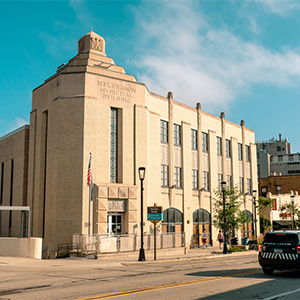
Mt. Lebanon’s Medical Pioneer
Despite a lingering reputation as an industrial center, Pittsburgh can lay claim to serving as home base for some of the world’s foremost medical innovators. The polio vaccine developed by Dr. Jonas Salk in the 1950s aided tremendously in mitigating the toll of the crippling disease. Three decades later, Dr. Thomas Starzl performed the first simultaneous heart and liver transplant, on a 6-year-old at Children’s Hospital of Pittsburgh.
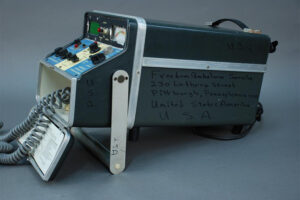
In between, Dr. Peter Safar pioneered a series of advances in emergency care, from formulating guidelines for cardiopulmonary resuscitation and establishing hospital intensive-care units to training paramedics and designing optimal configurations for ambulances.
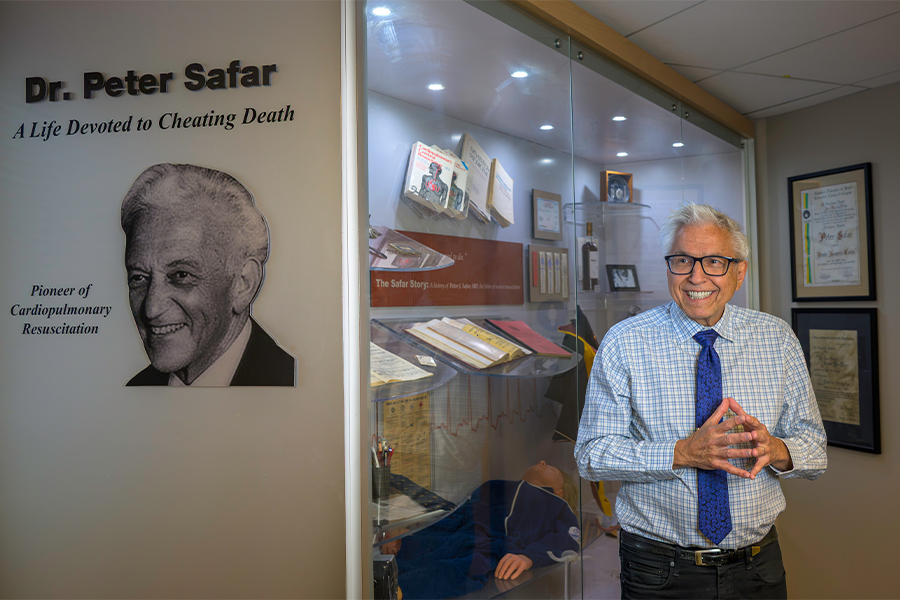
“It’s mind-boggling that one person did all that,” said Dr. Patrick Kochanek, who worked closely with Safar in the decade prior to his death in 2003 at age 79. “His contributions were seminal.”
Among his accomplishments, Safar launched the Pittsburgh-based International Resuscitation Research Center in 1979, serving as director for 15 years before turning the helm over to Kochanek. They not only were colleagues but lived near each other in Mt. Lebanon, with Safar on Hoodridge Drive and Kochanek on Altadena Drive.
Safar, who was born in Austria, joined the University of Pittsburgh staff in 1961, establishing one of the nation’s leading academic anesthesiology departments and the world’s first intensive-care medicine training program.
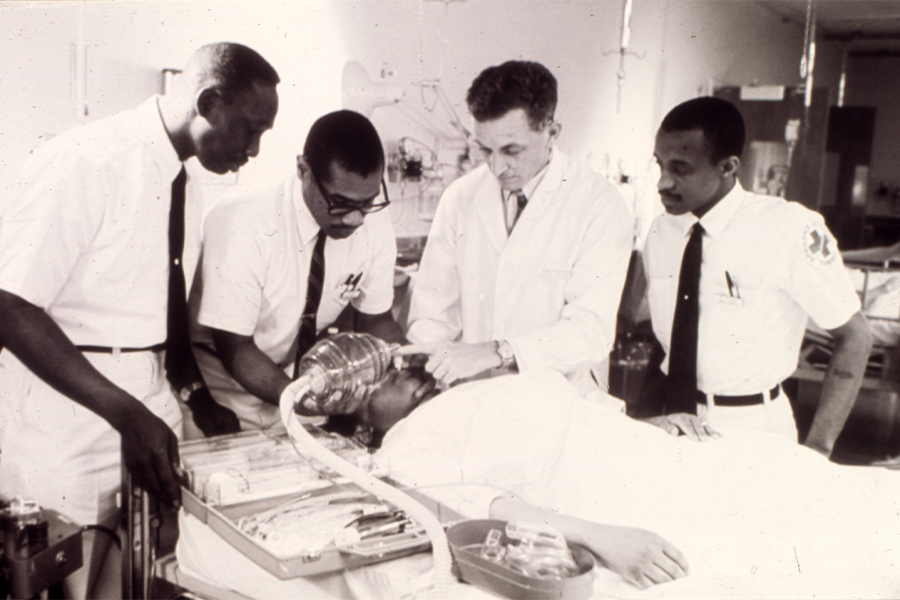
Those who learned from Safar included recruits for the Freedom House Ambulance Service, an initiative that began operating in 1967 with the goal of improving medical transport for residents of the predominantly Black Hill District neighborhood. As Safar wrote in Careers In Anesthesiology: An Autobiographical Memoir: “I saw an opportunity for Pittsburgh and beyond and offered them a deal: My department would help them (gratis) not only to get ambulances, but also to transport critically ill or injured patients with life support, if they would let us train attendants as a pilot project. … They would staff an experimental ambulance service to test the national ambulance design, equipment, and training guidelines we had just developed.”
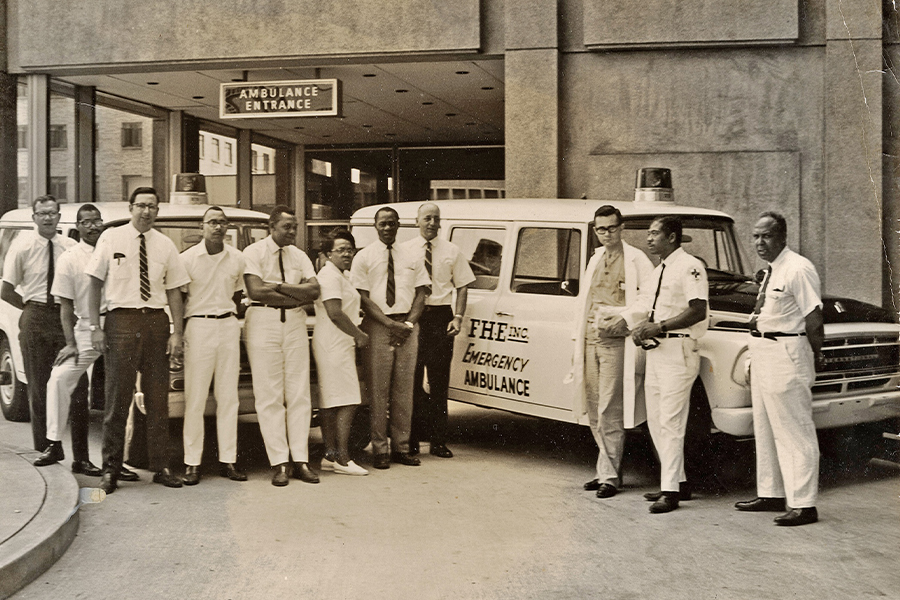
He and Dr. Nancy Caroline, Freedom House’s medical director, subsequently educated for what became the first paramedic crew in the United States, using a model that eventually became the national training standard. But although the ambulance service “eventually
included 44 African-Americans who had been labeled unemployable,” according to Safar, the city terminated the project after eight years.
Also in 1967, the World Federation of Societies of Anesthesiologists asked Safar to write a CPR instructors’ manual, a document that ultimately was published in three editions, translated into 12 languages and had more than 200,000 copies distributed and sold, according to his autobiography.
“As an anesthesiologist in the late 1950s, he knew that you needed cardiovascular output, and you needed oxygenation and you needed ventilation,” Kochanek said, referencing crucial steps such as chest compression and mouth-to-mouth resuscitation. “You needed all of these components, and if you weren’t doing that, it was bogus.”
For example, publications at the time would feature diagrams of supposedly effective procedures to aid people experiencing cardiac or respiratory arrest.
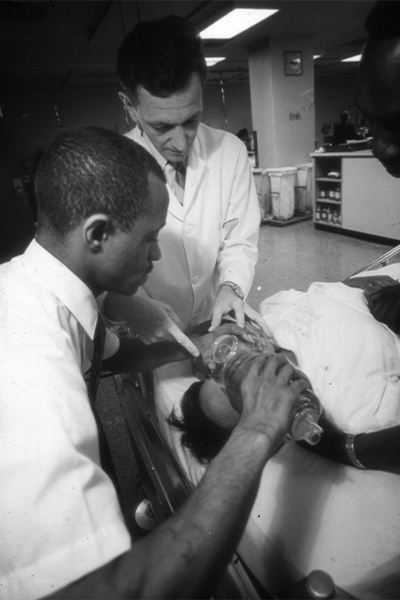
“That was one of the inspirations to Peter Safar, because he said, ‘That is useless.’ And Safar wouldn’t hold back. He’d say, ‘You are killing patients,’” Kochanek explained. “Safar wouldn’t say, ‘I think we need to do something about that.’ Safar would say, ‘We must do something about that.’”
Similarly, he took what he viewed as necessary measures to organize the nation’s first multidisciplinary intensive-care unit, while serving as a department chief at Baltimore City Hospital prior to moving to Pittsburgh.
“Our post-anesthesia recovery room was not staffed at nights,” Safar wrote. “A specially staffed area was needed, not only for patients still comatose after CPR attempts, but also for patients who had undergone critical operations and still needed controlled ventilation or fluid
resuscitation from shock. I thought, why not have such a unit next to the BCH polio ward, using the same nurses.”
Meanwhile, he worked toward improving the manner in which patients were transported to hospitals. Contrasting the modern use of well-equipped vehicles, he described Pittsburgh’s ambulance service circa 1961 as being “provided by policemen with only limited first-aid training, using station wagon-type vehicles.”
He later published a paper on how ambulances should be configured.
“It was based on being an anesthesiologist, where you can monitor the hemodynamics,” Kochanek said, referring to blood flow. “You can ventilate the patient. You can oxygenate. You can give drugs. You’re kind of immersed in with the patient.”
After 17 years, Safar left his University of Pittsburgh departmental chairmanship to concentrate on launching the International Resuscitation Research Center (IRRC), pursuing what he described as his principal scientific interest: identifying and promoting methods
to prevent premature death.
For his part, Detroit native Kochanek joined the University of Pittsburgh staff in 1986, bringing experience that included training in critical care management at Children’s National Hospital in Washington, D.C., after completing his internship and residency at the University of California.
“Among the various offers that I had, I chose to go to Pittsburgh because, obviously, Peter Safar was there,” he said. “Pittsburgh is still kind of Mecca for critical care in the U.S. We get a crazy number of trainee applicants and can really pick the cream of the crop.”
When Kochanek became the second IRRC director, he led efforts to rechristen the facility as the Safar Center for Resuscitation Research at the University of Pittsburgh School of Medicine.
“I said that such an honor might be considered after one’s death, but not now,” Safar wrote. “Kochanek, administrators and my associates insisted.”
More Memories
Beyond his decades of contributions to medicine, Safar found time for other pursuits.
“He was also an outstanding pianist. He would invite several members of the Pittsburgh Symphony over to his home, and he would play with them,” Kochanek said. “I didn’t know when he practiced, but he was pretty good.”
His multitude of waking hours apparently worked in his favor.
“I think he got one REM cycle at night, and then he took a nap for about 30 or 40 minutes at noon every day. That was how he worked,” Kochanek explained. “And it was, of course, before email, so he was on the telephone just constantly with people. That was Peter Safar.”
Another of Kochanek’s memories shows an informal side of Safar, even on the job:
“He loved red wine, and so he would bring a bottle of merlot to lab meetings with a whole bunch of Dixie cups. And he would give everyone a little Dixie cup half full of merlot. He used to say, ‘Wine sipping produces serendipitous discoveries. If you titrate it, it’s a stimulant.’ It would be like freeing up your mind to think more creatively at lab meetings.”
In the final years of his life, Safar continued to serve as a full-time principal investigator at the facility that bears his name. “When he got cancer and was getting way worse, he still was working, constantly,” Kochanek recalled. “He said, ‘Pat, this is only plumbing.’ That’s a typical way Safar would respond to something, when anyone else would say, ‘Well, I just can’t keep working now.’”
In his memory, Safar’s image abounds throughout the 11,000 square feet of the state-of-the-art resuscitation research center.
“There are pictures of Peter Safar with the pope, with the president. The scope of his connectivity and people’s high level of respect was pretty amazing,” Kochanek said. “He was pretty inspirational to everyone.”

 Full Story