


Service to community: Ron Block
“Initially I saw something that needed some attention and thought: I can do something about that. One thing led to another. You keep finding another area that needs some help. And the more success you have, the more fun it gets.”
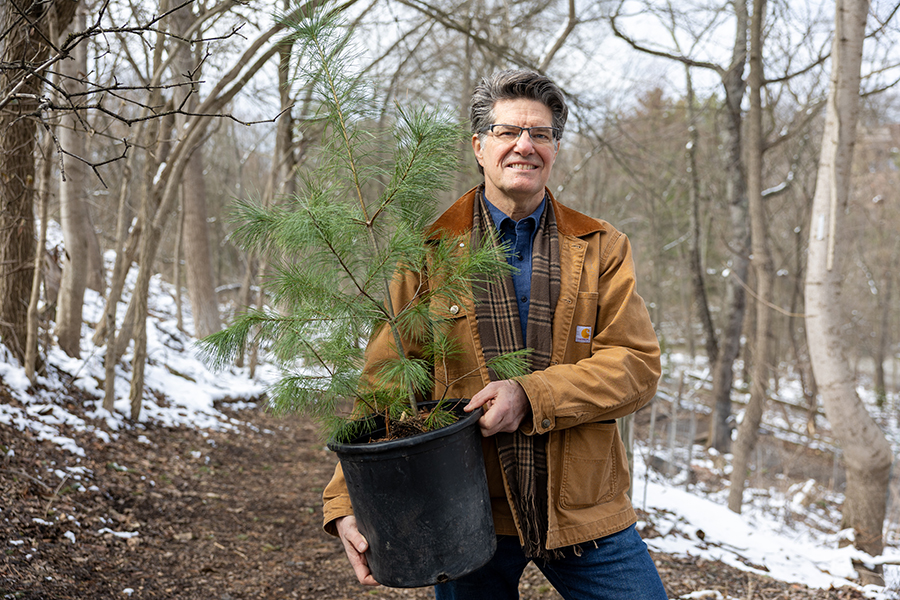
That’s the description Ron Block gives about how he started restoring Mt. Lebanon’s woodland parks — Bird and Twin Hills, primarily — and why he keeps going after 20 years of steady volunteer work. His success in transforming what he calls ”failed woodlands” into healthy, vibrant growing zones is what led him to receive this year’s Community Service Award from the Mt. Lebanon Civic Engagement Board.
According to the nomination submitted by Elaine Kramer of the Mt. Lebanon Nature Conservancy, ”the vision, sustained planning, and steady leadership behind these visible improvements in Bird Park and Twin Hills can be most profoundly traced to one person — Ron Block.” He has served on the conservancy board since 2006, as president and, since 2013, vice president of projects. Block, Woodhaven Drive, contributes about 400 volunteer hours annually, much of it walking the parks by himself to note where work needs to be done.
”He does a lot of what he does on his own time,” said conservancy board president Sarada Sangameswaran. ”Ron’s the one who has the plan in his head about what we have to do. He just works tirelessly and quietly behind the scenes, as well as with the volunteers.”
Block continually assesses the parks to determine what should be addressed, usually in a rolling five-year window. He’s replaced invasive plants with native trees and shrubs and taught others how to do so. Trained in landscape design, he envisions spring blooms and fall colors, knows which plants will help each other thrive, and created views and welcoming pathways.
When Block began his conservancy work two decades ago, the woodland parks were not in good shape. ”They weren’t regenerating themselves at all. The cover of invasive species was so thick that nothing could get through,” he said. ”If you don’t do anything about that over 40 or 50 years, you’re going to lose your park. All the big trees are going to die.”
Block said invasive plants have no natural check on them. ”Deer won’t eat honeysuckle or privet, for example. The stuff we’ve been clearing away doesn’t feed the native
animals at all. A lot of them are things people have in their yards. They get into a natural area and go crazy.” By removing the invasive species and replacing them with native plants and trees, Block and his helpers have reversed the trend.
He considers regeneration of native species his ultimate goal — and it’s a long-term one. ”If you make a space for those things, they’ll show up. It’ll never be finished. It took 50 or 60 years to get like that, so you’re not going to fix it overnight.”
There are currently about 70 species of native trees and 25 species of native shrubs in Bird Park — double what it was before Block started his campaign. Much of that variety is thanks to Tree Pittsburgh, which supplies species of native trees that are not always commercially available.
While walking the parks, Block catalogs plants that should be removed and those that should stay and be supported. He calculates the number of hours required and schedules the volunteers. He figures out how many new trees and shrubs are needed and how much deer-protection fencing and stakes are required, working with the Mt. Lebanon Public Works Department to order supplies. He creates a plant list for the site’s conditions and orders necessary trees, shrubs and seed mixes. He drives to pick up the trees he’s ordered, tends them
in his driveway until they can be planted, then totes them to the park for planting. He places stakes to show volunteers what should go where. He demonstrates how to plant and cage trees, remove invasives, realign trails and much more.
Hundreds of volunteers of all ages have worked with Block and absorbed his enthusiasm for creating and maintaining beautiful native woodlands. ”It’s really been great with the scouts and high school kids,” he said, ”because young people are the future of the parks. Getting them involved means they’ll have ownership in the future. If people don’t love the woods, then there’s nothing that’s going to protect those areas.
”In the early days there would only be two or three of us out there working. Now we’re making progress, so people want to be involved. It’s really rewarding to see 20 people show up for a project.”
Fellow conservancy board member Tom Schevtchuk credits Block for the success of accessibility improvements to the parks. ”Virtually all the bridges and stairs are Eagle Scout projects. Ron has been there with every one, guiding them through, developing plans, working with the municipality. In terms of being active, physically improving the parks, Ron has been the spearhead, the vision, the inspiration. I don’t know of anybody who has given more to the community.”
To get involved with the Mt. Lebanon Nature Conservancy, go to lebonature.org for notices of projects, which take place at least once a month.
Block draws strength from his work in our woodland parks. ”I’m out there with the squirrels and woodpeckers, so it’s a nice mental break for me,” he said. ”With everything going on in the world, it’s nice to be able to go out there and feel like you’re making a difference somewhere.”
 Full Story