



Shrubs for smaller landscapes
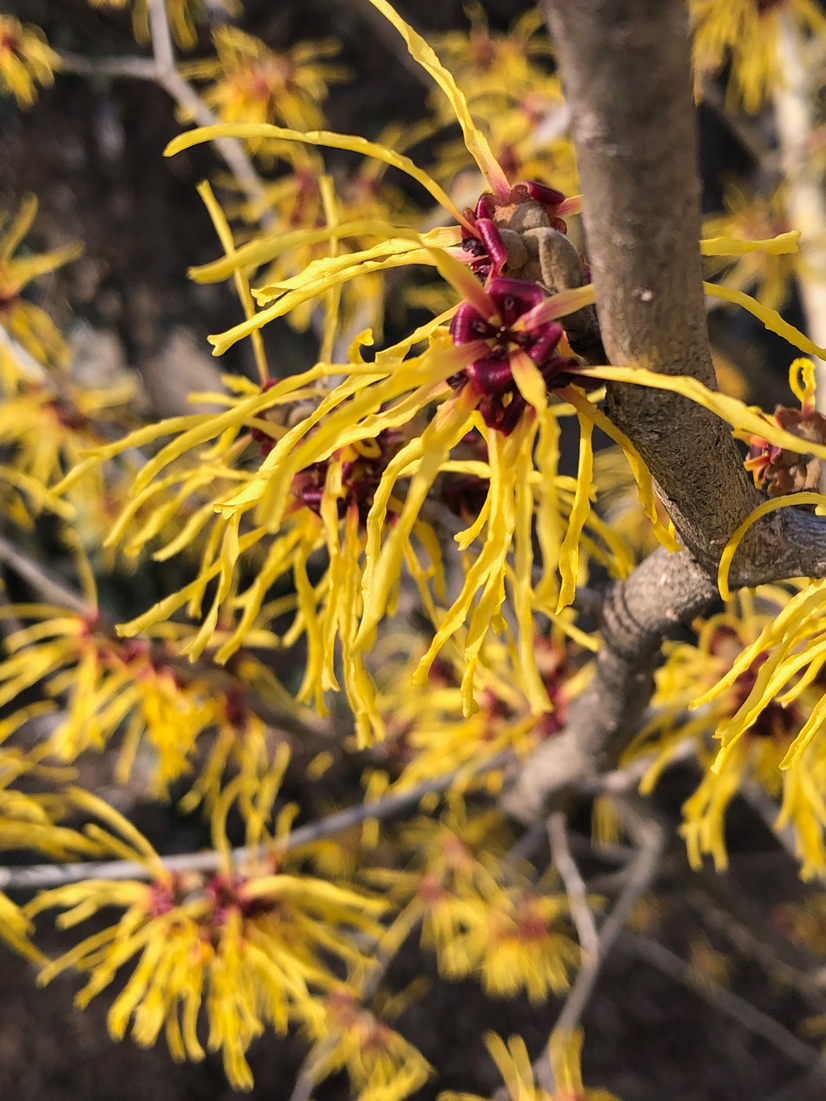
As the last blast of snow blanketed the landscape in March, the first spidery, yellow flowers of a tall witch hazel began to bloom. It’s one of the first shrubs to flower, starting the season in style. The native witch hazel is a tree/shrub that can grow to 20 feet, but a host of other varieties are smaller. The same is true for many shrubs.
When it comes to witch hazel varieties, Little Suzie only gets 4 to 5 feet tall and wide and Quasimodo is even smaller. Witch hazel is deer resistant, as are most of the other plants we’ll discuss here.
When it comes to shrubs, you have a multitude of choices for small landscapes.
Shrubs bring longtime seasonal beauty to the garden, are easy to grow and can live for many decades.
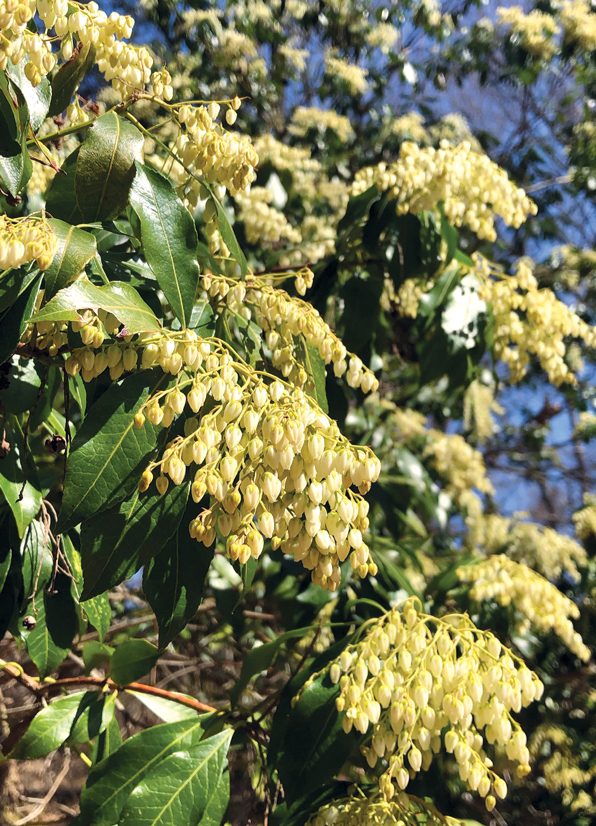
Japanese pieris blooms in consort with mid-season daffodils, with tiny bell-shaped flowers that smell like honeysuckle. It’s an understory plant, enjoying shade and acidic soil. After blooming, the new foliage is reddish, then turns green as it matures, remaining evergreen year-round. The exfoliating bark has great winter interest too. Cavatine only gets a couple of feet tall and wide. Bisbee Dwarf is a little smaller.
As the daffodils begin to fade, kerria begins to flower. The shrub has sort of fallen out of favor in the garden world, which is a shame, as it doesn’t need much from the gardener. Kerria grows in part sun/shade with different cultivars ranging from 8 feet wide and tall to under 3. Picta has beautiful green and white variegated foliage which sets off the orange single flowers and only grows to about 3 feet tall.
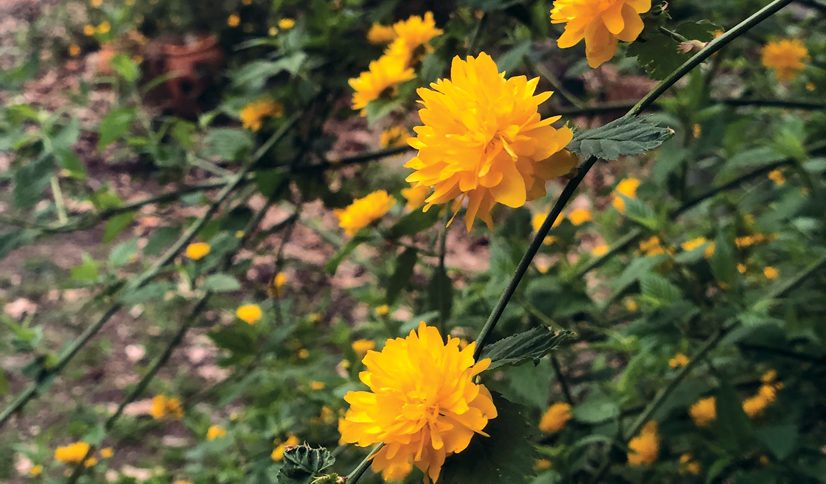
Kerria japonica is bigger, but the double flowers are to die for. Many cultivars of kerria have a weeping habit — when their tips touch the ground, they will root, then can be removed from the mother plant and transplanted to another part of the garden.
When planting shrubs, it’s important to find something called the root flare, where the trunk meets the roots. Sometimes that means gently brushing off soil where the two meet. The root flare needs to be above ground when planting.
Dig a hole two to three times bigger around than the root ball. Use a shovel handle as a measuring device to get the depth right before putting the shrub in the planting hole.
Water deeply right away and mulch the plant. Mulch should never touch the trunk of the plant and should look like a doughnut; never a volcano.
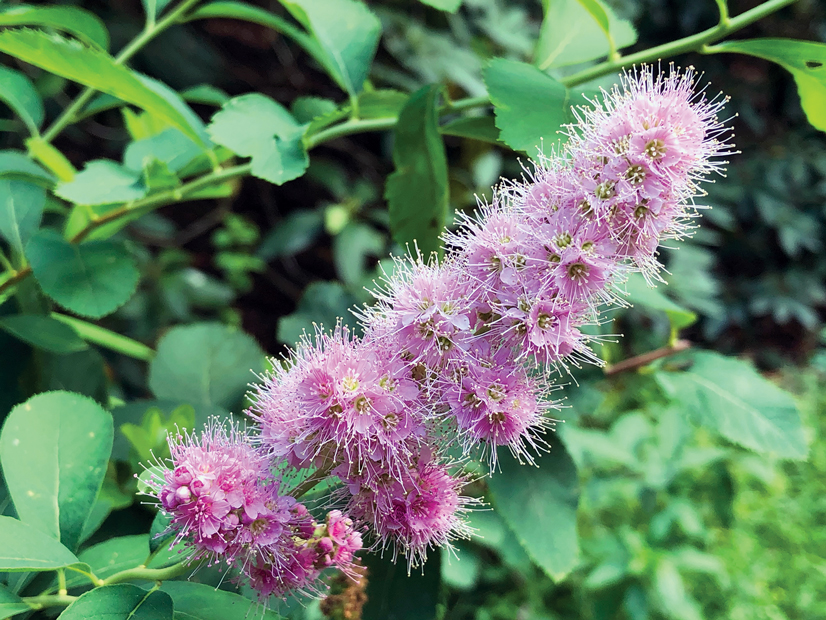
When the tulips are in full bloom, many early spireas will also be in bloom. The most common has pretty white flowers like Bridal Wreath, which is indestructible, will grow in full sun to part shade and gets 4 to 8 feet tall and wide. Spirea billardii has amazing deep pink conical blooms a little later in the season and will throw another set of blooms in early summer. Little Bonnie and Little Princess are dwarf varieties.
Although it’s not a shrub, a small Japanese maple tree can be a wonderful addition to the landscape. There are hundreds of small, slow-growing versions like Velvet Viking, Crimson Queen, Waterfall, Shaina and a host of others.
It’s important to choose the right plant for the right place. Check the plant tag to determine how big the plants are at maturity. That doesn’t mean they magically stop at a certain height but will slow down when growing to full size. The tag will also give information about sun or shade and other pertinent details.
Although aralia Sun King is an herbaceous perennial, it grows shrublike at maturity with arching chartreuse foliage that does best in shade and produces insignificant clusters of white flowers.
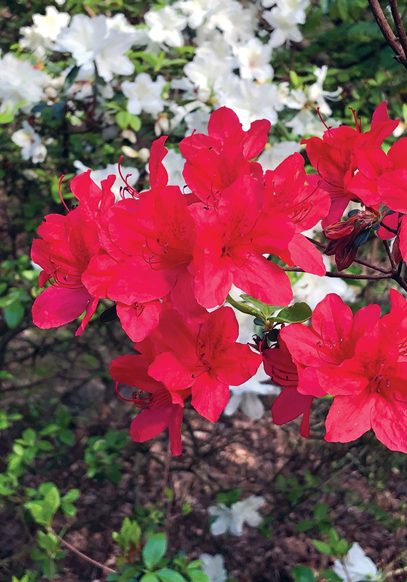
Azaleas come in many shapes and sizes and even though they’re not a favorite of deer, they will need protection in the form of repellents. Their cheery blooms in a wide range of colors put on a show at the end of April into May. They do best in acidic soil, fertilized with Hollytone in part shade. Fat bumblebees will buzz from flower to flower in the late afternoon, enjoying the pollen and nectar. Flame grows to 8 feet tall, and the flowers are a unique bright orange color.
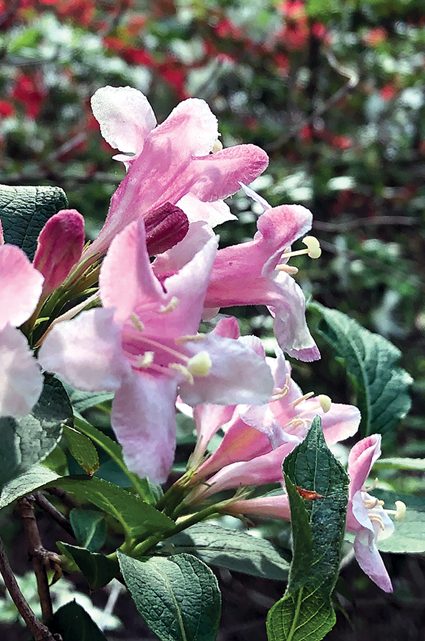
Blooming at the same time is weigela, an underused landscape shrub which has many different varieties. My Monet is a favorite with pretty pink, white and green variegated foliage and pink flowers. It only gets about 2 feet tall and 3 feet wide. Weigela can have pink, red, white, purple and yellow flowers. It will grow in full sun to partial shade and is not bothered with many pests or diseases.
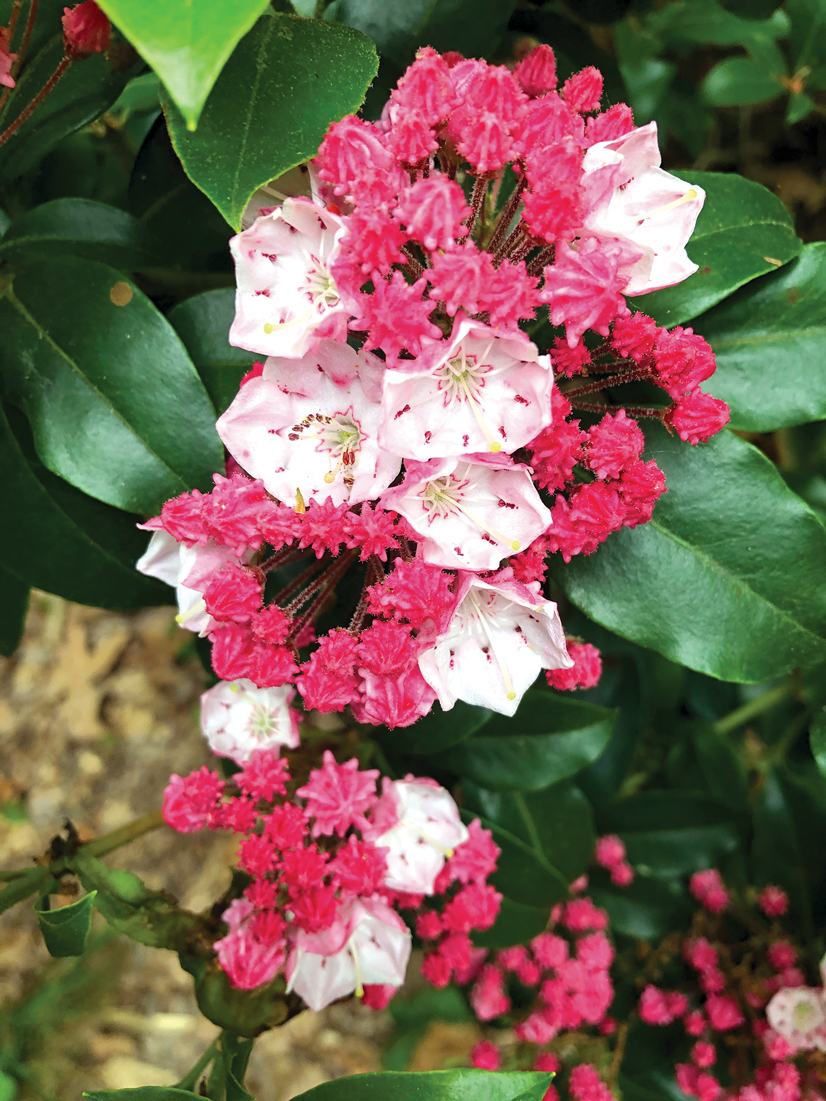
Even though mountain laurel is poisonous to the deer, young bucks and fawns will nibble on the buds, then sleep it off in the woods. But Pennsylvania’s (and Connecticut’s) state flower is worth a try. Nipmuck is a spectacular May blooming shrub. The creamy white flowers are covered with deep pinkish red spots, but it’s the buds before the bloom that are the star with their bright red color.
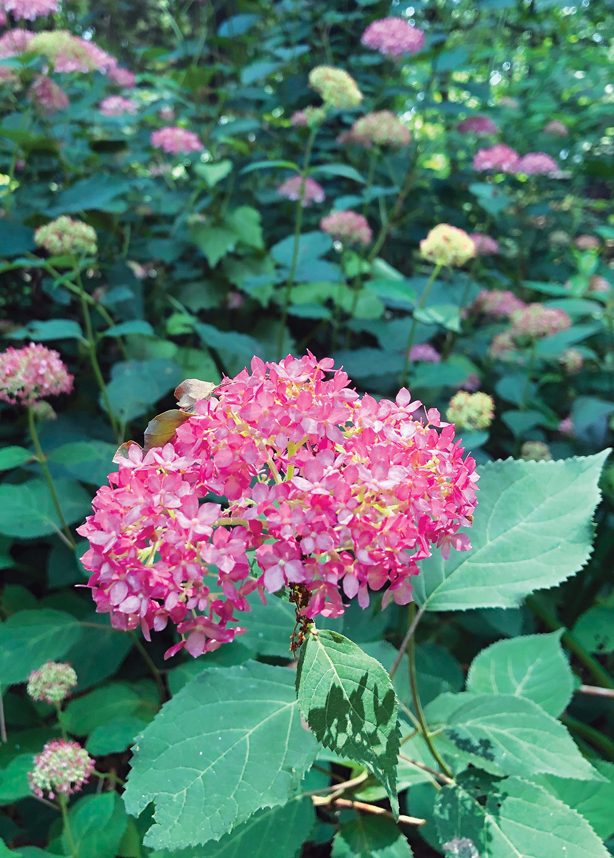
Another shrub that will need deer protection is hydrangea. Hydrangea arborescens, or smooth hydrangea, is one of the most reliable bloomers. Unlike many hydrangeas, it puts on buds with this season’s growth as opposed to last year’s. Mini Mauvette only gets 3 feet tall and wide. One of the toughest and most beautiful is Invincibelle Spirit. It has pink blooms and will flower in anywhere from full sun to part shade. The owners of Invincibelle Spirit donate $1 from the sale of each shrub to the Breast Cancer Research Foundation.
As summer unfolds, the most loved/hated shrub comes into bloom. Rose of Sharon can be a bully, dropping seeds and sprouting babies everywhere. The plants can be pruned to be a tree or shrub. Sugar Tip and other varieties are sterile — the seeds will not germinate. As a tree it will reach about 15 feet but can be shaped to be whatever the gardener wants. The importance of variegated foliage like the green and white leaves of Sugar Tip gives plants a longer season of interest. It has double pink flowers which are showstoppers.
Late summer brings one of the best one-trick ponies in the garden. Beautyberry puts on deep purple, edible berries and can grow just about anywhere. Pearl Glam is 4 feet tall and 3 feet wide.

 Full Story