


Winter safety suggestions
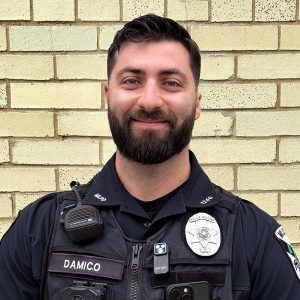
The Mt. Lebanon Police Department welcomes two new officers to its ranks.
Nicholas D’Amico has a bachelor’s degree in criminal justice from California University of Pennsylvania, and served five years in the Army as a military police officer, stationed at Ft. Myer, Virginia and at the Pentagon with the Army’s Criminal Investigation Division, reaching the rank of Staff Sergeant. In his spare time, D’Amico plays golf, and is planning to enroll in a graduate degree program.
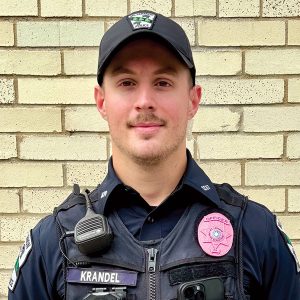
James Krandel graduated from Kent State University with a criminology degree. He joined the Air Force right after college and is currently in the reserves. Krandel likes to golf and spend time with his lab/Bernese mountain dog mix, Reggie.
ROOM TO RESPOND The Mt. Lebanon Fire Department’s vehicles can take up a lot of street space. Be sure to leave room on the street so first responders can get to you in case of an emergency. Have guests park in your driveway, or close to the curb, and avoid parking directly across from other cars if possible. Park at least 15 feet from a fire hydrant and at least 20 feet from an intersection. If guests have to park on the road, ask them to park on one side of the road only. Ask contractors to park off the roadway, if they can.
You can also make it easier for firefighters by making sure fire hydrants near your house are easy to find. Remove any snow and ice, and clear about a 3-foot space around the hydrant for firefighters to work. Keep a clear path to the hydrant from the street.
WINTER SAFETY Cold weather brings its own set of challenges. Mt. Lebanon’s first responders have some tips to guide you safely through the season.
Heating
- Keep anything that can burn at least 3 feet from all heat sources, including fireplaces, wood stoves, radiators, portable heaters or candles.
- Always plug space heaters directly into an outlet, and make sure its cord isn’t damaged or frayed.
- Never use an oven to heat your home.
- Reach out to the Mt. Lebanon Fire Department for a fireplace consultation. A trained member of the department staff will come to your home and make sure your equipment is safe, and if they find any problems, will recommend that you have a certified chimney sweep perform a thorough check. To schedule your inspection, call 412-343-3402 or visit mtlebanon.org/fireplaceinspections.
Power outages
- Keep freezers and refrigerators closed. Throw away any food that has been exposed to temperatures 40 degrees or higher for two hours or more, or that has an unusual odor, color or texture.
- Have alternate plans for refrigerating medicines or using power-dependent medical devices.
- If you use a generator, only use it outdoors, at least 20 feet away from windows, doors and attached garages.
- Disconnect appliances and electronics to avoid damage from electrical surges.
- Go to a community location with power if cold is extreme and you can’t heat your home.
- Emergency prep kits If you lose power, have an emergency kit on hand with the following:
- Flashlight and extra batteries
- Battery-powered NOAA Weather Radio and portable radio to receive emergency information
- Water and food that does not require cooking or refrigeration, such as dried fruit, nuts and granola bars.
- Extra prescription medicine
- Baby items such as diapers and formula
- First-aid supplies
- Extra pet food and warm shelter for pets
On the road Black ice can be difficult to see. If the temperature is near freezing, drive like you’re on ice — you may be.
Keep your gas tank near full to avoid ice in the tank and fuel lines. Avoid traveling alone. Let someone know your timetable and primary and alternate routes. Before leaving, check 511pa.com for the latest traffic and road incidents, including construction and weather conditions and restrictions.
Just like in your home, carry a winter storm survival kit in your car that includes the following:
- Mobile phone, charger, batteries
- Blankets/sleeping bags
- Flashlight with extra batteries
- First-aid kit
- Knife
- High-calorie, non-perishable food
- Extra clothing to keep dry
- Large empty can to use as emergency toilet, tissues, toilet paper and paper towels
- Small can and waterproof matches to melt snow for drinking water
- Sack of sand or cat litter for traction
- Shovel
- Windshield scraper and brush
- Tool kit
- Tow rope
- Battery booster cables
- Water container
- Candle and matches to provide light and in an emergency, lifesaving heat
- Old-school paper road maps
 Full Story