


Freedom to Read
 Patrons will tell you: There’s a lot to love about Mt. Lebanon Public Library. Award-winning programs for all ages, knowledgeable and committed staff members, a wide and lovingly curated collection of items from multiple media and plans for a building renovation. Enough good stuff to make it a thriving community hub. But one thing stood out above all the rest, and caught the eye of the Pennsylvania Library Association’s Library of the Year selection board, which chose Mt. Lebanon from among 630 public libraries, marking the first time any Allegheny County library has received the award. The library is the commonwealth’s first (and at press time only) book sanctuary.
The Chicago Public Library and the City of Chicago launched the first book sanctuary in 2022, declaring themselves a space for endangered stories and calling for others to join the movement. Currently, there are 5,361 book sanctuaries across the country.
What’s a book sanctuary?
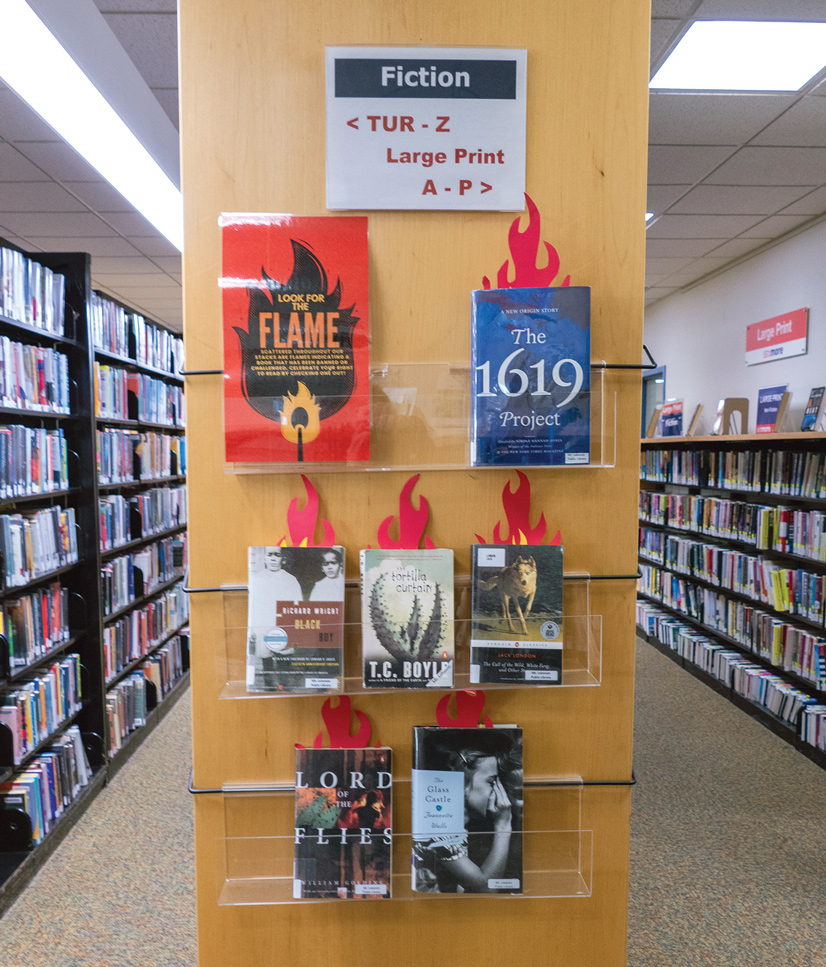
It’s a space where access to books and the right to read them are protected. A book sanctuary is committed to doing at least one of the following:
- Collecting and protecting endangered books
- Making those books broadly accessible
- Hosting book talks and events on banned books featuring diverse voices
- Educating others on the history of book bans and burning
- Upholding the First Amendment rights of all citizens
This means the library will not remove or relocate any materials from the library’s collection, as long as those materials meet the standards of the approved policy.
Jessica Miller, director of the Cleve J. Fredricksen Library in Camp Hill, nominated Mt. Lebanon for the award.
“As well as the myriad programs and other activities the library holds, I am nominating them for their courage in protecting the interests of all of the members of their community,” she wrote. “This was not a decision that they took lightly. While it would once have been obvious that providing materials for everyone is a basic tenet of library service, this has become far more controversial recently. In spite of potential opposition, they made this declaration to ensure that all of their patrons can see their viewpoints represented. They became a leader in their community and for libraries across the state.”
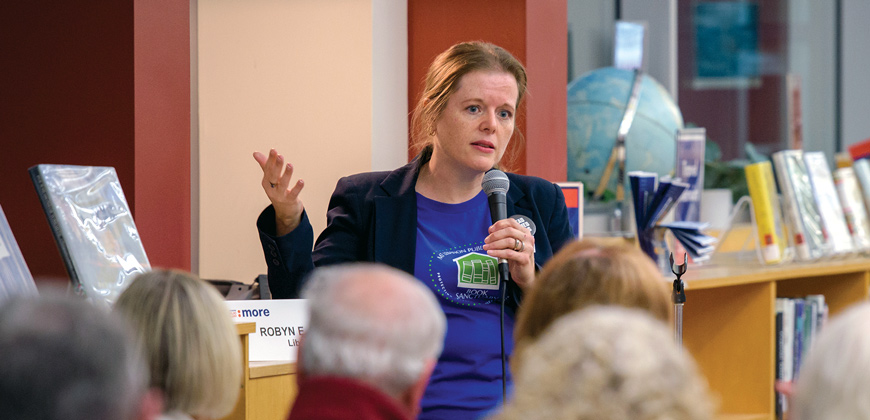
Library Director Robyn Vittek worked closely with the library’s board of trustees to make the sanctuary designation a reality, announcing the status in February.
“The thing that resonated with me the most was, I would get comments like ‘This makes me so proud of our community,’” she said. “Not the library, not me, but the community.”
Why are book sanctuaries necessary?
According to the American Library Association’s Office for Intellectual Freedom, 2024 saw 821 attempts to censor library materials and services, resulting in challenges to 2,452 titles.
The overwhelming majority of these censorship attempts — 72 percent — came from pressure groups, elected officials, board members and school administrators, while just 16 percent of the challenges came from parents, and the remainder came from individuals.
 “I want to be sure we’re all on the same page,” Vittek said in her opening remarks at a panel discussion the library hosted to cap off Banned Book Week in October. “We may use some terms interchangeably – book banning, book challenges, censorship — these often refer to the same thing. What we’re talking about is the idea that certain individuals, or more often now organized groups, make the attempt to limit availability of some materials at public libraries, school libraries, and occasionally even private bookstores.
“The most common justifications provided were falsely labeled ‘illegal obscenity,’ the inclusion of LGBTQIA+ characters or themes, or books covering topics of race, racism, equity and social justice,” said Vittek.
While book bannings have been around almost as long as books, the panelists agreed that the current climate is robust.
“We saw things ramp up after the 2021 municipal elections,” said Rich Ting, a senior staff attorney for the American Civil Liberties Union in Pennsylvania. “A lot of school boards were filled with far right folks that really went after books about race and LGBT.”
Mt. Lebanon Library by the numbers
Founded: 1932
Employees: 42
Volunteers: 149
2024 Operating revenue: $2,724,326
2024 Circulation: 596,208 items
The effects of censorship
Matthew Good has firsthand experience with attempts at censorship. In 2023, he resigned his position as librarian at Donegal Junior High School in Lancaster County over a policy that would not allow students to access young adult books without written permission from a parent or guardian.
“School librarians are seeing a change in policy,” he said, “moving away from librarians setting the policies, and more focused on school administration and board members writing a policy limiting what libraries can purchase.”
Children’s book author Katherine Locke has been on the receiving end of challenges to two of their books, What Are Your Words?, A Book About Pronouns; and This is Our Rainbow: 16 Stories of Her, Him, Them and Us.
Locke described the threefold impact book challenges have on authors.
“It’s affected authors … in incredible ways,” they said. “Loss of income as book sales decrease because of banning. As sales drop, it becomes harder to sell their next book. Also, school visits, which supplement authors’ incomes, have almost completely dried up for authors of LGBTQ books, or books featuring characters of color, or dealing with any issues with race.”
Authors on pressure groups’ lists also face a significant emotional punch.
“The amount of hate you get on a daily basis is incredibly demoralizing,” said Locke. “You wake up and you open your email, and it is full of messages from your website’s contact form, calling you a pedophile or a groomer. Then you open up Instagram, and that’s where some person has apparently spent their entire night leaving comments on every single post from the last six months. It’s like, [you post] a picture of your cat, and they’re like, ‘Groomer.’ OK, maybe I do need to brush my cat more often,” they said with a laugh.
“You have that day after day, and you have people coming up to you at festivals who say ‘You’re a pedophile, you’re a groomer,’ if you’re writing these books about queerness for children,” they continued. “People that are spending hours of their time sending out these things, to review-bomb authors, spending hours leaving comments on Amazon, Goodreads, Barnes & Noble, Facebook. There are much better hobbies.”
The third impact, Locke said, is self-censorship. Authors begin to question their own writing choices.
“I can feel it, and I’ve talked to other authors who feel it,” they said. “‘You know, I was going to make this character non-binary, but maybe that’s a bad decision. Maybe the book would do better, and maybe I could still have a career, if this book didn’t have a non-binary character.’”
 Self-censorship can extend beyond writers. Librarians and teachers may decide against introducing a book to students because they fear that if school board members have a problem with it, they won’t get backing from their bosses.
“I don’t want anyone to lose their job because they brought my book into their library,” Locke said.
What’s an illegal obscenity?
In 1973, the U.S. Supreme Court heard Miller v. California, in which publisher Marvin Miller appealed his conviction for knowingly distributing obscene material. Miller’s argument was that there should be a national standard for what constitutes obscene materials, rather than leaving the determination to local communities. Although the court ruled against Miller, Chief Justice Warren Burger wrote in the majority opinion a three-pronged test that could serve as a guideline:
The average person, applying contemporary community standards, would find that the work, taken as a whole:
appeals to the prurient interest
depicts or describes, in a patently offensive way, sexual conduct specifically defined by the applicable state law
lacks serious literary, artistic, political or scientific value.
Fighting back
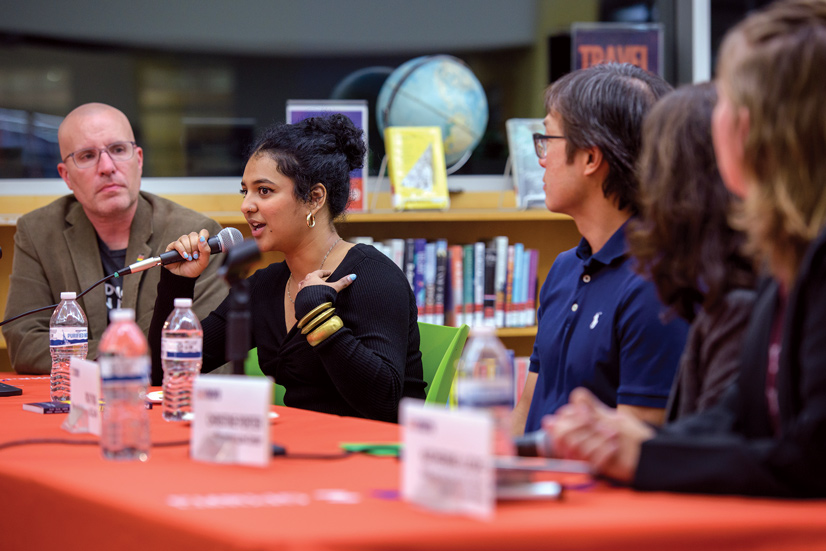
As attempts to ban books have grown, so has advocacy for intellectual freedom.
“We’re getting more and more calls from families and from students, asking ‘How can we fight this? How can we fight what’s happening,” said Christine Porter, staff attorney in the Pittsburgh office of the Education Law Center.
University of Pittsburgh student Edha Gupta successfully fought a book ban when she was in high school. In 2021, the Central York School District banned a diversity resource list, which kept about 300 books from being taught in classrooms.
“I had never seen something so egregious,” said Gupta. “Also, the comfortability with this sort of censorship — it was a scary culture that was developing.”
Gupta helped rally a group of students to protest the ban, eventually co-authoring Ban This! How One School Fought Two Book Bans and Won (and How You Can, Too), an account of the experience and a how-to book for students facing similar challenges. The second book ban happened in 2023, when the district tried to remove two young adult books. She believes the current climate is worse now than it was when she campaigned against the ban.
“Four years ago, I felt there was more protection of my First Amendment rights; I don’t think that protection exists anymore, and that makes it hard to speak up,” she said.
Community pride
 Mt. Lebanon Public Library Board president Bob Taylor is proud of the Library Association’s choice, but even prouder of the sanctuary decision.
“We’re incredibly honored to be named Library of the Year,” he said. “I think it’s a testament to the good work Robyn and her staff do. I think both Robyn and the board are passionate about being forward thinking, protecting our First Amendment rights and making sure our library is empowered to do what we all hope libraries will do.”
He echoes Vittek’s sentiment about the community.
“The feedback I received was 100 percent positive. I think we live in a community that values free speech and First Amendment rights, and so we felt enabled to take that kind of step.”
“I feel like a library is the heart of a community, and Mt. Lebanon is certainly evident of that, with the number of people who love and support our library,” said Vittek. “I realize that not every library has the same level of support from the community, the board and elected officials to make a statement like this.”
Although Mt. Lebanon remains the only book sanctuary in the commonwealth, Vittek has had a few library directors ask her about the process.
“I was a little afraid to be the first, but I’m happy we were, and I don’t want us to be the last.”
 Full Story