From heart failure to cardiac nurse hopeful
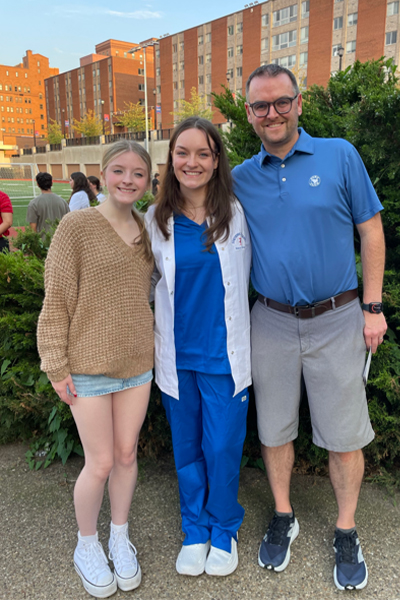
When Ainsley Flynn first arrived home from college during the holidays in December 2024, she was happy to spend time with family and friends. That was before she became sick from the flu and spent most of the rest of the trip trying to recover.
The 20-year-old Mt. Lebanon graduate’s symptoms worsened, and she went to St. Clair Hospital’s emergency room with shortness of breath and extreme sweating. She tested positive for Influenza A and the St. Clair team found fluid accumulating around her heart. By this time, Flynn was vomiting, confused and delirious. Her heart was so weak, it couldn’t pump enough blood to support her body.
Doctors performed a bedside procedure to drain fluid from her heart, but after reassessing, they decided she needed a higher level of care. Flynn was transported by Life Flight to Allegheny General Hospital (AGH), where they could provide intensive emergency cardiac care.
When she arrived at AGH, Dr. Candice Lee placed Flynn on ECMO (Extracorporeal Membrane Oxygenation), a life support machine that takes over heart and lung functioning, allowing the body to heal from severe respiratory or cardiac failure.
Flynn was diagnosed with viral myocarditis, which caused cardiogenic shock, a condition with mortality rates of 50 percent. Viral myocarditis is uncommon and can be moderate or severe, causing fatigue, chest pain, arrhythmias and even heart failure. It’s typically triggered by viral infections including the flu and COVID-19, explained Lee.
“I had no idea this is something that could happen [from the flu],” Flynn said.
She needed a second heart pump for the ECMO to work, so doctors implanted the Impella CP heart pump, the smallest one in the world. She spent the next 12 days at AGH before going home to recover. Flynn said because of her age and the level of care she received at both St. Clair and AGH, she’s had no long-term complications.
Today, Flynn is finishing her undergraduate degree in nursing at Duquesne University and works as a patient care technician in the same unit where she was a critically ill patient just two years ago. She hopes to become a cardiac nurse after graduation.
“She was so young and it just really affected all of us as providers and healthcare workers, just seeing somebody so young and otherwise very healthy being so sick,” said Lee. “We were all just over the moon when she recovered. And then to have her come back and work in our unit … It’s just kind of surreal.”
Flynn hopes to raise awareness about the serious dangers many common viruses can have, even in healthy young adults.
“Having Ainsley come back — having her optimism and insight — is very helpful for our team,” said Lee. “She can relate to what they’re going through and it’s more impactful when she provides any opinions.”
“There’s a lot of misinformation out there,” Flynn said. “The flu is obviously very deadly. It has been for many years, but I think people don’t take it as seriously as it is.”
Anyone with a virus who is experiencing high fever, fast heartrate, low blood pressure or swelling should seek medical care according to Lee. She recommends the annual flu shot, practicing routine hygiene and wearing masks when you’re sick or in close contact with people who are sick.
 Full Story